
Market Analysis
Stock Market Today, Oct 15: Hot CPI, Chip Rout
Read Article
Market Analysis
AI-powered insights into global financial markets
 StockCram Editorial3 min read
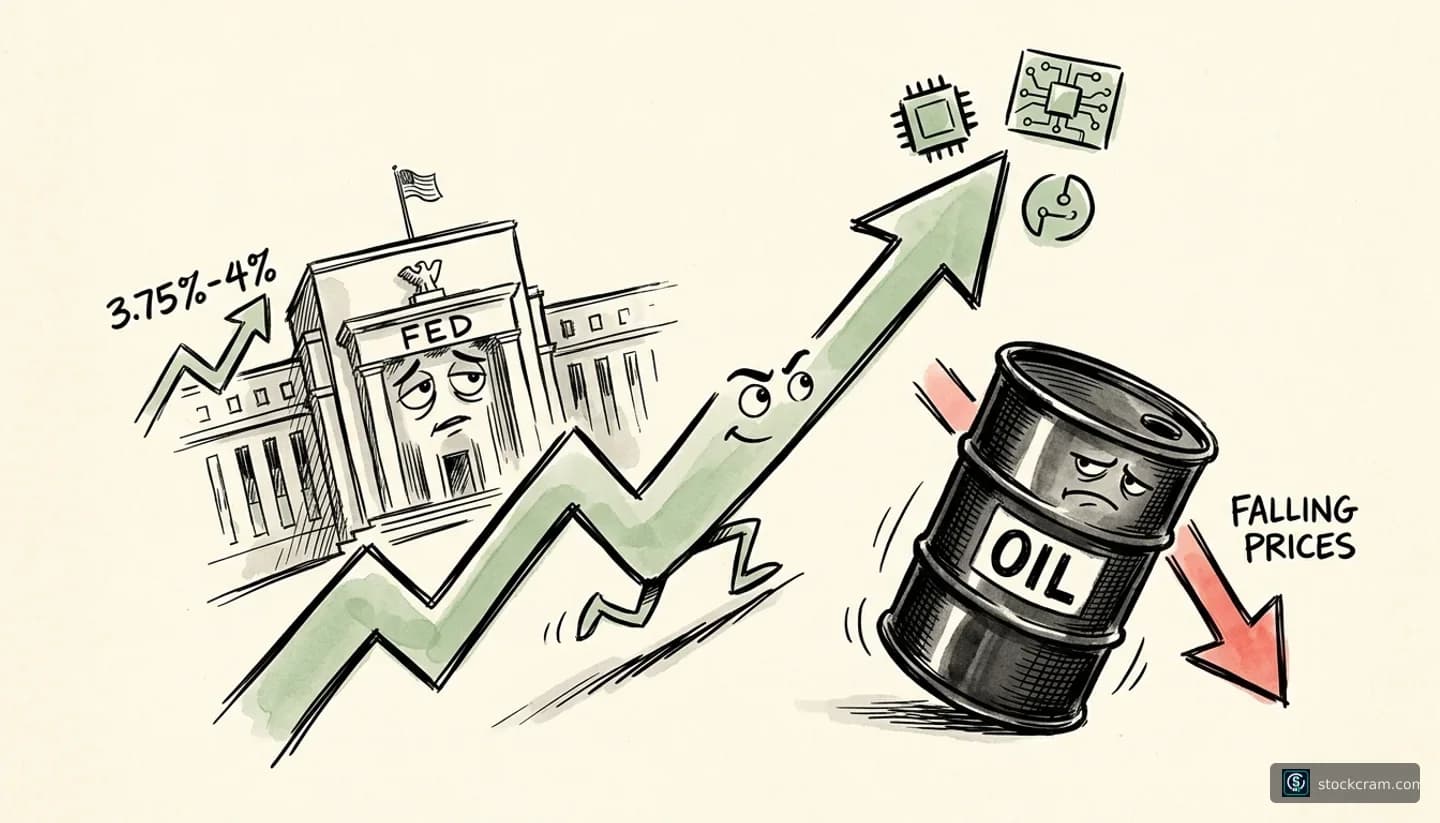
Markets rallied despite the Fed's first rate hike in three years as falling oil prices eased inflation fears and tech earnings remained strong.
Educational purposes only. This content does not constitute investment advice. Read our disclaimer
StockCram is not a broker-dealer, investment adviser, or financial institution. All content is for educational and informational purposes only and should not be construed as personalized investment advice. Consult a qualified financial professional before making investment decisions. Past performance does not guarantee future results.The Federal Reserve raised its benchmark interest rate by 25 basis points to 3.75%-4% on September 16, marking its first increase since 2023. The unanimous decision came after three FOMC members had pushed for a hike at the July meeting. Fed projections signal another potential rate increase this year as Chairman Kevin Warsh emphasized fighting elevated inflation.
This hawkish pivot reverses the Fed's earlier dovish stance and signals that inflation remains a top concern despite economic strength. Markets initially rallied on relief that the Fed followed through on expectations, but the path forward suggests tighter financial conditions ahead. This rate decision follows the pattern explored in our analysis of why the Fed might raise rates in September 2026, where we explained how recent monthly inflation trends can tell a completely different story than annual numbers.
Equities
Major indexes rise despite rate hike; S&P 500 up 0.4%
Rates
Treasury yields rise; 10-year up to 4.79%
FX
Dollar strengthens moderately on hawkish Fed stance
Commodities
Oil falls on demand concerns
Oil prices fell for a third straight day on September 17, with Brent crude dropping to around $102 per barrel and WTI dipping below $100. Saudi Arabia is offering additional crude shipments through ship-to-ship transfers near Oman's Sohar port, bypassing its damaged East-West pipeline and easing supply disruption fears in the Middle East.
Lower oil prices reduce a key inflation driver that has pressured the Fed to raise rates. The Saudi workaround shows supply chains adapting despite geopolitical tensions, giving markets breathing room and supporting risk assets across the board. This development illustrates the geopolitical risk premium in action—when war fears ease and supply routes stabilize, oil often falls while stocks rise.
Equities
Broad rally as energy cost concerns ease
Rates
Lower inflation expectations support bonds
FX
Weaker dollar pressure from falling energy costs
Commodities
Brent falls to $102/barrel; WTI drops below $100
US stocks surged on September 17, with the S&P 500 and Nasdaq 100 posting their strongest sessions since early August. Chipmakers rallied after Nvidia issued an optimistic outlook, with Asian semiconductor stocks like Samsung and SK Hynix following suit. The tech-driven rally extended into US futures, signaling continued momentum.
Nvidia's confidence in sustained AI demand reassures investors that the tech sector's growth story remains intact despite rising rates. The rally shows markets are willing to look past Fed tightening when corporate fundamentals remain strong, particularly in high-growth sectors. This resilience echoes the debate covered in our guide to whether we're in another AI bubble, where hyperscaler capex tops $700B in 2026 while smart investors disagree on valuation.
Equities
S&P 500 and Nasdaq post best gains since early August
Rates
Equity strength competes with Fed hawkishness
FX
Risk-on sentiment pressures safe havens
Commodities
Tech demand supports industrial metals
Generac Holdings jumped 33% in extended trading after announcing a long-term agreement to supply backup generators for Amazon's data centers. The deal includes $2.4 billion in initial deliveries across 2027-2028, with potential total purchases reaching $8 billion. Amazon received warrants to buy up to 1.69 million Generac shares at $200.93 each.
This deal highlights the massive infrastructure investment required to support AI and cloud computing growth. It transforms Generac from a consumer-focused hurricane-season play into a critical AI infrastructure supplier, showing how the AI boom is creating opportunities beyond chips and software. The scale of this capital expenditure commitment underscores the real-world buildout behind AI's growth story.
Equities
Boosts infrastructure and AI-related stocks
Rates
No significant effect
FX
Minimal direct impact
Commodities
Signals strong industrial demand
In 2018, the Fed raised rates four times despite market concerns, eventually pausing after equity volatility spiked in December. The S&P 500 initially rallied on each hike before correcting later in the year.
Markets tolerated gradual hikes when corporate earnings remained strong, but volatility increased as tightening accumulated. The Fed ultimately pivoted to cuts in 2019 after growth concerns emerged—a pattern that illustrates how stocks can go up when interest rates are high, but only when fundamentals support the valuation.
The durability of the oil price decline depends on whether Saudi Arabia can fully restore pipeline capacity and whether Middle East tensions escalate. The Fed's next move hinges on inflation data over the coming weeks, and tech rally sustainability depends on continued AI spending.