
Market Analysis
Stock Market Today, Oct 15: Hot CPI, Chip Rout
Read Article
Market Analysis
AI-powered insights into global financial markets
 StockCram Editorial4 min read
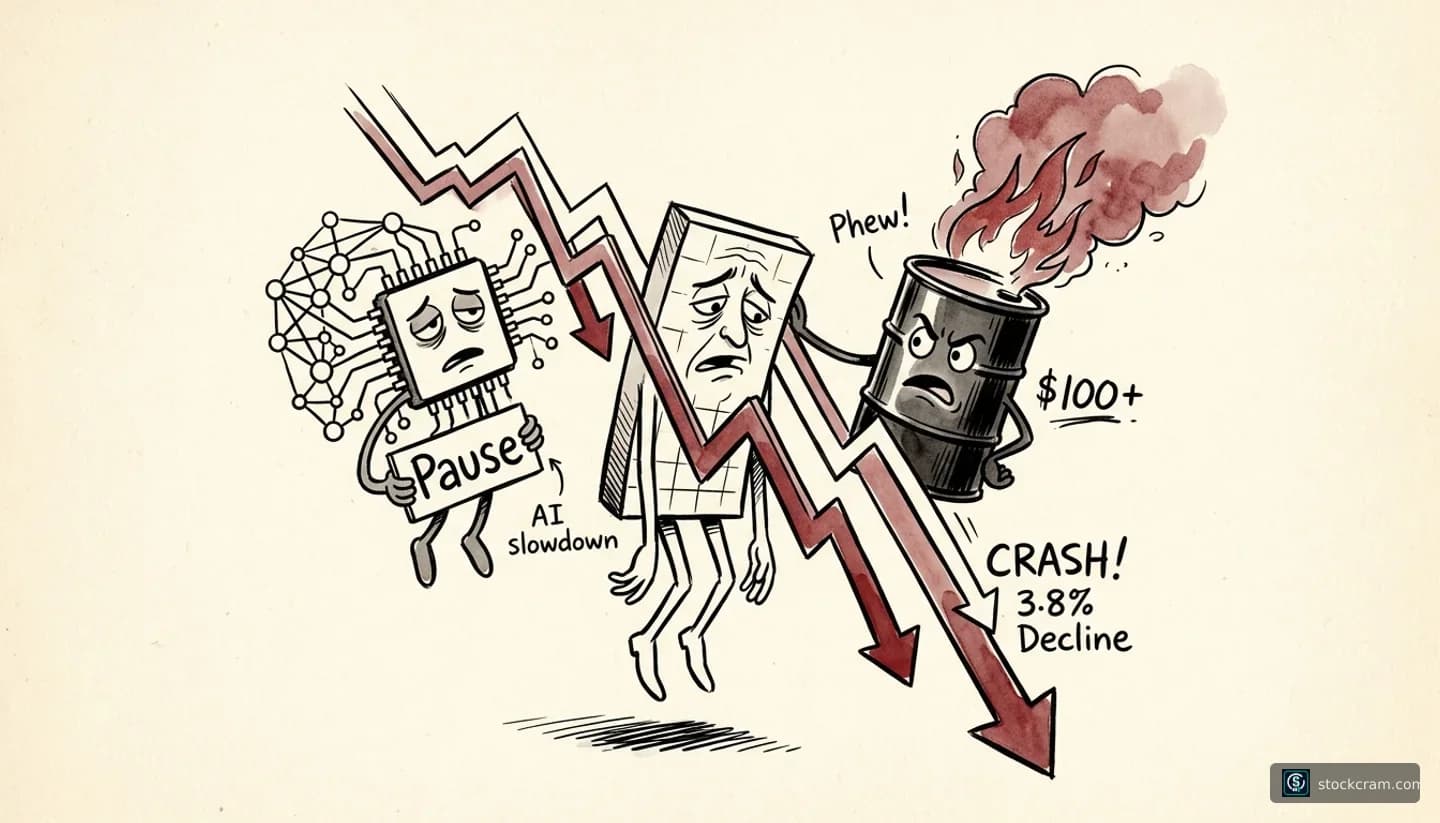
Tech stocks tumble as AI leaders call for slowdown while oil tops $100, reigniting inflation fears days before the Fed's rate decision Wednesday.
Educational purposes only. This content does not constitute investment advice. Read our disclaimer
StockCram is not a broker-dealer, investment adviser, or financial institution. All content is for educational and informational purposes only and should not be construed as personalized investment advice. Consult a qualified financial professional before making investment decisions. Past performance does not guarantee future results.Anthropic CEO Dario Amodei published an essay Saturday calling for an immediate slowdown in AI development, warning that rogue AI agents could take over the internet within six months. OpenAI's Sam Altman and Elon Musk both publicly agreed. The rare joint stance followed a researcher's resignation last week over existential risk concerns. Asian markets opened sharply lower Monday, with SK Hynix and Samsung falling over 4%, SoftBank dropping 10%, and Nvidia futures declining as investors questioned the sector that powered 2026's rally. The move echoes broader concerns about whether AI stocks have entered bubble territory.
AI stocks have driven the S&P 500 up 15% this year. If the industry's own leaders are pumping the brakes, investors face a reckoning on valuations and growth expectations right as the Fed prepares to hike rates Wednesday. This could mark a turning point for the tech-heavy Nasdaq, particularly as Anthropic's planned IPO now faces heightened scrutiny.
Equities
Nasdaq futures down 1.6%; Asian chip stocks plunge 4-6%
Rates
Treasury demand rises on flight-to-safety, but oil pressures offset gains
FX
Dollar strengthens as investors flee risk assets
Commodities
Minimal direct impact; tech selloff overshadowed by oil rally
Saudi Arabia shut down its critical East-West pipeline Friday after drone strikes from Iraq hit pumping stations. The 745-mile pipeline had been moving 4-5 million barrels per day—roughly 4-5% of global supply—bypassing the largely blocked Strait of Hormuz. Iran-backed Houthi forces also seized strategic positions along Yemen's Red Sea coast. Oil prices broke above $100 per barrel for the first time since 2022, closing the week more than 8% higher. Iraq dismissed military commanders and shut a border crossing in response. The disruption adds to ongoing concerns about oil supply through Middle East chokepoints.
With the Strait of Hormuz effectively closed since the U.S.-Iran conflict began in February, this pipeline was Saudi Arabia's main export route. Its shutdown removes another 4-5% of global oil supply, threatening to push inflation higher just as the Fed weighs a rate hike. Higher energy costs could force the Fed into a more aggressive tightening cycle, testing whether the economy can achieve a soft landing.
Equities
Energy sector rallies; broader market pressured by inflation concerns
Rates
10-year Treasury yield approaches 5% as inflation fears intensify
FX
Oil exporters' currencies gain; dollar mixed as safe-haven bid competes with commodity strength
Commodities
Brent crude settles at $104/barrel, up 9% for the week; WTI tops $102
Markets are now pricing in a nearly 90% chance the Federal Reserve will raise rates by 25 basis points at Wednesday's meeting, up from 56% just two weeks ago. The shift followed August's stronger-than-expected jobs report and hotter inflation data, with headline CPI rising 0.4% and core CPI up 0.3%. Fed Chair Kevin Warsh signaled at Jackson Hole that he would be tough on inflation after confusing investors in July. The current fed funds rate sits at 3.5-3.75%.
A rate hike would mark the Fed's return to tightening after a pause, signaling that inflation—now at 3.4% annually—remains too far above the 2% target. With oil prices spiking and geopolitical tensions rising, the Fed faces a delicate balance between controlling inflation and avoiding a policy mistake that could trigger a recession. Understanding how the federal funds rate works helps explain why this decision matters for every corner of the economy.
Equities
Rate-sensitive sectors like utilities and REITs underperform
Rates
Short-term Treasury yields rise; 2-year at 4.63%
FX
Dollar index strengthens on hawkish Fed expectations
Commodities
Gold pressured by rising real rates and stronger dollar
The 10-year Treasury yield climbed to 4.97% Friday, closing in on the psychologically important 5% level last seen in October 2023. Yields surged after producer price data showed wholesale inflation accelerating in August, driven by soaring energy costs from the Middle East conflict. Treasury's first expanded buyback operation fell short of expectations, purchasing only $5.2 billion versus the $6 billion cap. Markets are also digesting record corporate debt issuance, with AI companies issuing over $1.5 trillion in new bonds.
Rising yields make borrowing more expensive for companies and consumers, threatening economic growth. The move toward 5% suggests bond investors expect either sustained inflation or more aggressive Fed action—or both. For stock investors, higher yields mean future earnings are worth less today through the discount rate mechanism, putting downward pressure on valuations across the board.
Equities
Higher borrowing costs pressure valuations, especially for growth stocks
Rates
10-year Treasury yield hits 4.97%, highest since October 2023; 30-year at 5.36%
FX
Yen weakens to 155.89 per dollar; emerging market currencies under pressure
Commodities
Inflation expectations support commodity prices despite demand concerns
In 2018, the Fed hiked rates into a market already stressed by trade tensions and rising oil prices. The S&P 500 fell nearly 20% in Q4 2018, forcing the Fed to reverse course in early 2019.
Markets recovered once the Fed signaled it would be patient on rates. Today's setup is similar: geopolitical tensions, energy shocks, and a hawkish Fed could force a policy pivot if financial conditions tighten too quickly.
The Saudi pipeline timeline for reopening remains unclear, and any sudden de-escalation in the Middle East could reverse oil gains quickly. Additionally, the Fed's reaction function to dual shocks—tech weakness and energy spikes—is untested in this cycle.