
Market Analysis
Stock Market Today, Oct 15: Hot CPI, Chip Rout
Read Article
Market Analysis
AI-powered insights into global financial markets
 StockCram Editorial4 min read
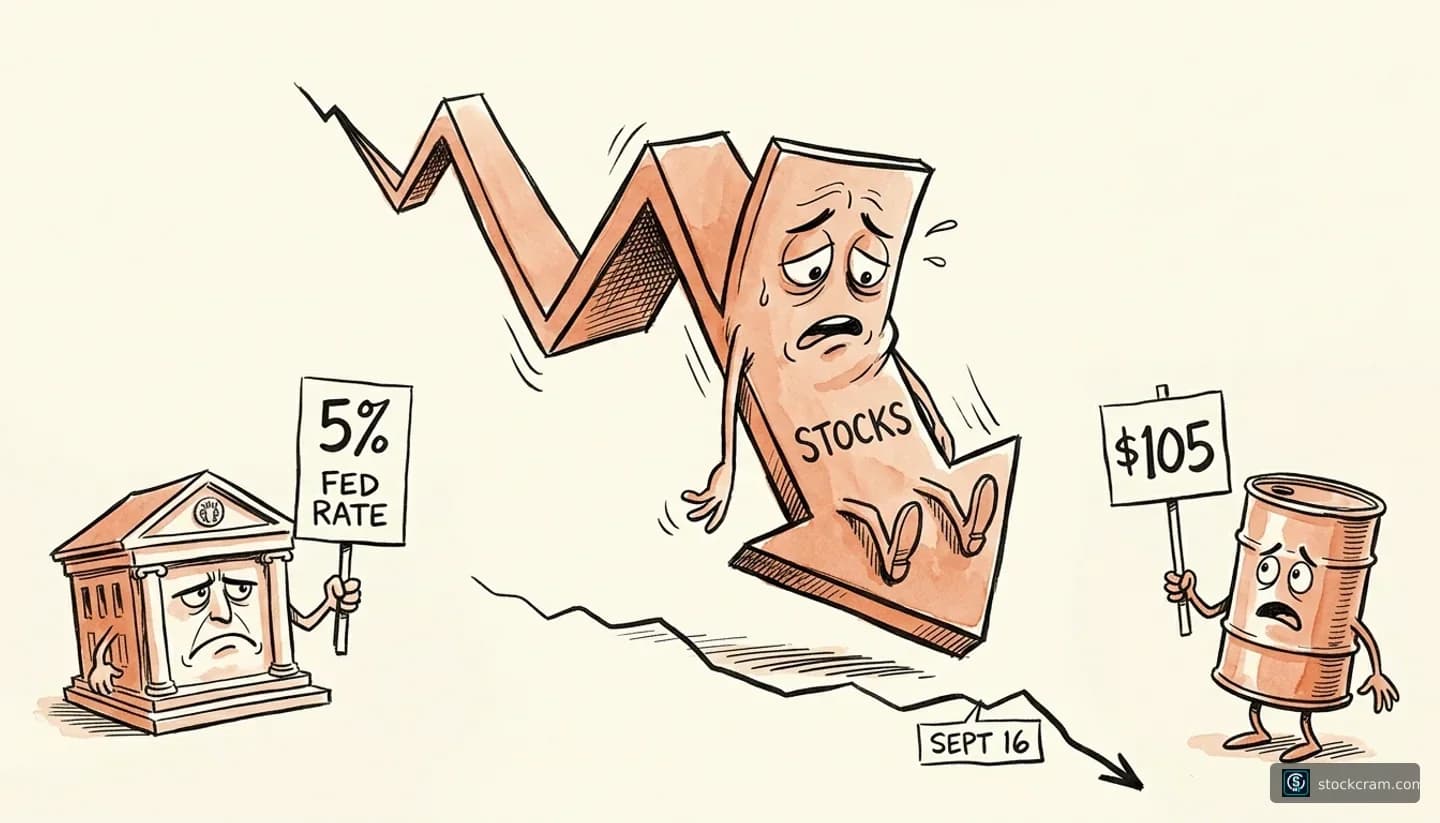
Fed rate hike expected as oil tops $105 and Treasury yields hit 5%—highest since 2007. Crypto legislation stalls in Senate as markets brace for Warsh's first tightening move since 2023.
Educational purposes only. This content does not constitute investment advice. Read our disclaimer
StockCram is not a broker-dealer, investment adviser, or financial institution. All content is for educational and informational purposes only and should not be construed as personalized investment advice. Consult a qualified financial professional before making investment decisions. Past performance does not guarantee future results.The Federal Reserve meets today with futures markets pricing a 93% probability of a 25-basis-point rate increase to 3.75%-4.00%. This would mark the first rate hike since July 2023, reversing the easing cycle as inflation remains stubbornly above the Fed's 2% target at 3.4%. Chair Kevin Warsh faces mounting pressure to restore credibility after recent hot inflation prints showed prices accelerating faster than expected.
A rate hike signals the Fed is prioritizing inflation control over growth concerns, potentially extending the higher-for-longer rate environment that has already pushed borrowing costs to multi-year highs. This decision will directly impact borrowing costs across mortgages, credit cards, and corporate debt. The accompanying economic projections and Warsh's 2:30 PM press conference will reveal whether this is a one-and-done move or the start of a new tightening cycle—critical context for investors trying to position portfolios in this shifting landscape.
Equities
S&P 500 down 0.45%, Dow drops 328 points on Tuesday
Rates
10-year Treasury yield hits 5%, highest since 2007
FX
Dollar strength as rate hike expectations firm
Commodities
Gold pressured by rising real yields
Crude oil prices climbed back above $105 per barrel after Saudi Arabia cancelled European oil shipments following drone attacks that forced closure of the critical East-West pipeline. The pipeline, which provides an alternative route around the volatile Strait of Hormuz, has no clear timeline for reopening. Iran-backed Houthi militants have renewed strikes on energy infrastructure, while Libya suspended operations at two oilfields amid protests, compounding the supply squeeze.
Rising energy costs threaten to reignite inflation just as the Fed prepares to tighten policy, creating a dangerous feedback loop. Oil above $100 hits consumer wallets through higher gasoline and diesel prices, potentially slowing spending and economic growth. For markets, sustained elevated oil could force the Fed into a more aggressive stance, creating a stagflation risk where growth slows while inflation accelerates. Energy sector outperformance contrasts sharply with weakness in rate-sensitive tech stocks, highlighting the challenging rotation investors face.
Equities
Energy stocks outperform; tech and consumer discretionary lag
Rates
Upward pressure on yields via inflation fears
FX
Pressure on oil-importing currencies
Commodities
Brent crude near $108, up 24% in past month
The benchmark 10-year Treasury yield surged to 5.04% on Tuesday before settling at 5.01%, breaching the psychologically important 5% level for the first time since July 2007. The move reflects a global bond selloff driven by surging oil prices, sticky inflation, and a weak 20-year bond auction that showed tepid demand. The 30-year yield reached 5.37%, while the 2-year hit its highest level since July 2024, steepening the yield curve.
Higher yields make borrowing more expensive for consumers and businesses, threatening economic growth at a time when the economy is already showing signs of strain. The 5% threshold is psychologically significant because it offers investors attractive risk-free returns, pulling capital away from stocks in what some call the end of the TINA (There Is No Alternative) era. For housing, mortgage rates are climbing sharply, further pressuring affordability. If yields stay elevated, corporate earnings could face pressure from higher debt costs, particularly hurting AI infrastructure companies that rely on cheap capital for massive data center investments.
Equities
Broad pressure on stocks, especially growth names
Rates
Mortgage rates climb, 30-year bond yield at 5.37%
FX
Dollar gains on yield advantage
Commodities
Strengthens dollar headwind for commodities
The Senate failed to advance the CLARITY Act in a procedural vote on September 15, falling short of the 60 votes needed to begin debate on landmark crypto legislation. The bill, which would establish a regulatory framework separating digital commodities from securities, had passed the House in July 2025 but stalled amid partisan disagreements over enforcement authority and consumer protections. Bitcoin dropped 2.85% to around $76,826 following the news.
The failed vote extends regulatory uncertainty in the crypto market, potentially delaying institutional adoption and keeping major players on the sidelines. Without clear rules distinguishing which digital assets are commodities versus securities, exchanges and developers face continued legal risk from enforcement actions. The defeat suggests comprehensive crypto regulation may be pushed into 2027, leaving the industry in limbo through the midterm elections and making it harder for traditional financial institutions to offer crypto services to clients.
Equities
Crypto-related stocks down: Coinbase -4.7%, mining stocks pressured
Rates
Minimal effect
FX
Limited direct impact
Commodities
Bitcoin falls to $76,826, Ethereum drops 2.7%
The last time the 10-year Treasury yield crossed 5% was in July 2007, just months before the financial crisis. Back then, the Fed was also in a tightening cycle, having raised rates to combat housing-driven inflation before credit markets seized up.
Within months of that 5% threshold, credit markets froze and stocks entered a brutal bear market that would eventually see the S&P 500 fall more than 50%. Today's situation differs in important ways—corporate balance sheets are stronger, unemployment remains low, and the banking system is better capitalized—but the 5% yield threshold historically marks a tipping point where economic cracks begin to show and the cost of capital becomes restrictive enough to slow growth.
Fed's forward guidance remains unclear—will they signal one-and-done or a multi-hike cycle? Middle East conflict trajectory is unpredictable and could either ease or intensify supply disruptions. Market reaction to the Fed decision could be volatile depending on whether Warsh strikes a hawkish or cautious tone in his press conference.