
Market Analysis
Markets This Week: Oil Spike, Tech Selloff
Read Article
Market Analysis
AI-powered insights into global financial markets
 StockCram Editorial3 min read
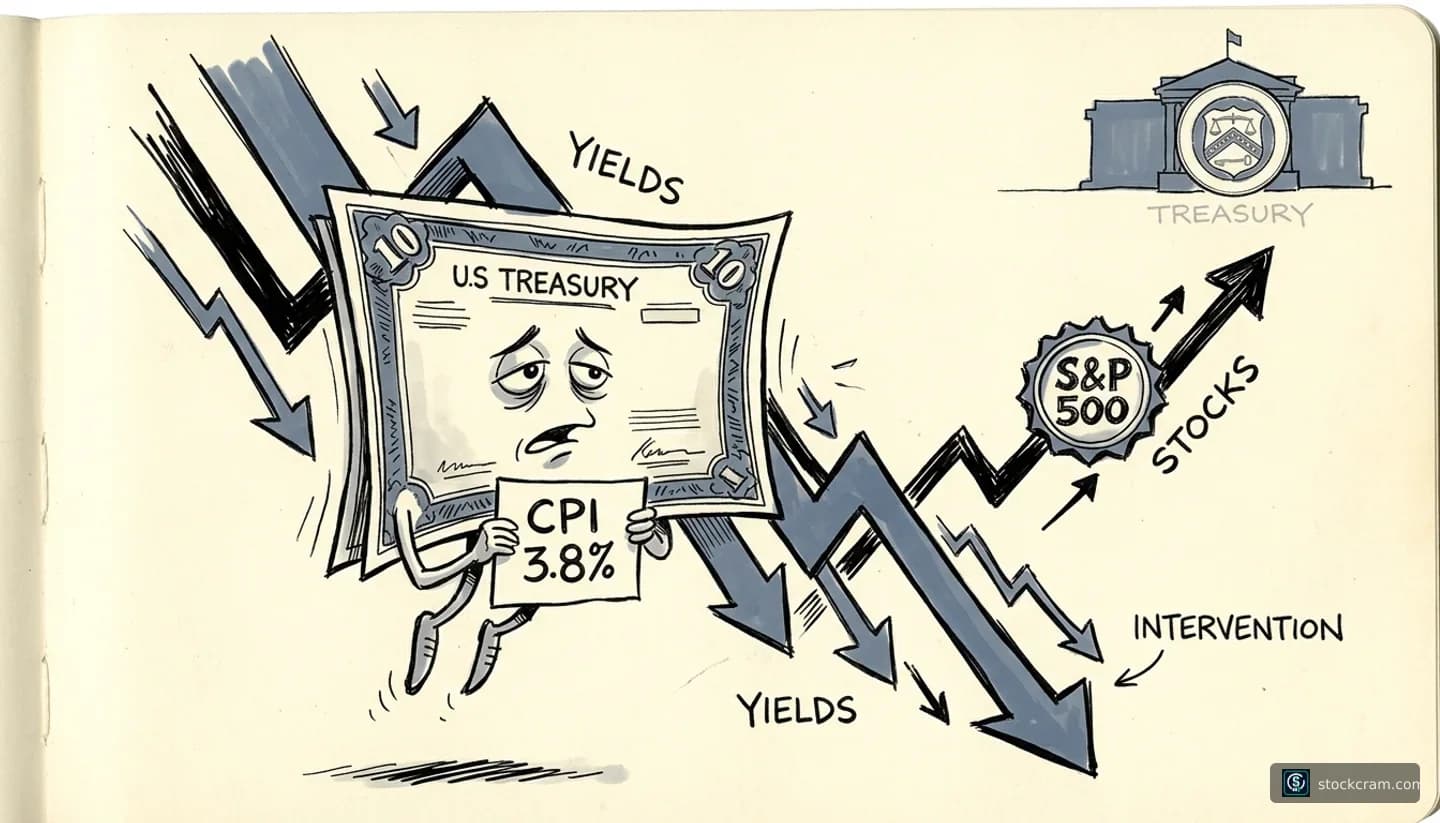
Treasury Secretary Bessent stunned markets with a surprise bond buyback plan, sending yields tumbling and stocks higher in a dramatic intervention to tame borrowing costs.
Educational purposes only. This content does not constitute investment advice. Read our disclaimer
StockCram is not a broker-dealer, investment adviser, or financial institution. All content is for educational and informational purposes only and should not be construed as personalized investment advice. Consult a qualified financial professional before making investment decisions. Past performance does not guarantee future results.Treasury Secretary Scott Bessent announced Wednesday that the government will at least double its bond buyback operations from $2 billion to $4 billion per operation, targeting 10- to 30-year bonds. The surprise move came as yields hit nearly 20-year highs, with the 30-year bond reaching levels not seen since 2007. The accelerated buybacks start September 9 and run through November 4.
This emergency intervention signals how worried officials are about runaway borrowing costs. When long-term yields spike, mortgage rates and business loans follow—slowing the economy. By stepping in as a buyer, Treasury is trying to prevent a bond market meltdown that could choke off growth and rattle stocks. The move directly impacts the term premium investors demand for holding long-dated debt.
Equities
S&P 500 rose 0.31% to 7,715; broad market rally on lower borrowing costs
Rates
30-year yields plunged 10 basis points to 5.18%; 10-year fell to 4.65%
FX
Dollar fell to three-month low against major currencies
Commodities
Gold climbed to highest since early June; oil held near $85
The Federal Reserve released minutes from its July 28-29 meeting on Wednesday afternoon, revealing a divided committee. Officials kept rates steady at 3.5% to 3.75% but showed no consensus on when to cut, citing elevated inflation—especially energy prices linked to the Iran conflict. Three members dissented on the decision.
Markets have been pricing in rate cuts by year-end, but the Fed is signaling patience. As long as oil stays elevated and inflation runs hot, borrowing costs stay higher for longer. That squeezes corporate profits and makes stocks less attractive compared to bonds. The split committee suggests hawkish and dovish members remain far apart on the path forward.
Equities
Mixed reaction; tech weakness offset by cyclical strength
Rates
Fed held rates at 3.5%-3.75%; no clear signal on cuts despite market hopes
FX
Neutral; dollar weakness driven by Treasury action, not Fed policy shift
Commodities
Oil focus on Middle East tensions outweighed Fed commentary
Target, TJX, and Lowe's all reported second-quarter earnings on Wednesday that topped Wall Street expectations. Target showed traffic gains and raised its outlook, while TJX posted $15.2 billion in revenue with strong performance across HomeGoods and TJ Maxx. Lowe's results were more cautious, highlighting consumer hesitation on big-ticket home improvement purchases despite beating estimates.
These reports show consumers are still spending—but they're hunting for deals and avoiding major purchases. That's the signature of an economy under pressure from high prices and interest rates. If the value retailers are winning while home improvement lags, it tells you shoppers are stretched but not broken yet. The divergence matters for sector rotation and portfolio positioning.
Equities
Consumer discretionary stocks rallied; Target, TJX, Lowe's all beat estimates
Rates
Retail strength supports case for higher-for-longer rates
FX
Minimal direct impact
Commodities
No direct impact
Oil prices hovered near $85 per barrel as conflicting signals emerged from Washington and Tehran over the Strait of Hormuz. President Trump said no talks were underway with Iran, contradicting earlier optimism. A 60-day ceasefire expired Monday with no breakthrough, and Iranian officials threatened to escalate tensions if diplomacy fails.
The Strait of Hormuz is the world's most critical oil chokepoint—about 20% of global supply flows through it. Every dollar oil climbs adds to inflation and eats into consumer wallets. Until this standoff resolves, the Fed can't declare victory on inflation, and markets will stay jittery. The situation tests whether investors should panic sell during geopolitical uncertainty or stay the course.
Equities
Energy sector strength offset by pressure on consumer-facing stocks
Rates
Higher oil feeds inflation fears, complicating Fed's path
FX
Minimal; geopolitical risk premium fading slightly
Commodities
WTI crude held four-day gain near $85; gold rallied on safe-haven demand
In March 2020, the Fed launched emergency bond purchases to stabilize markets during the COVID crash, buying $80 billion per month in Treasuries. That intervention stopped a freefall in bond prices and sparked a multi-year stock rally.
Markets rallied sharply as yields stabilized and liquidity flooded the system. The S&P 500 surged 60% over the next year. However, the flood of money also planted the seeds for the inflation surge that followed—a reminder that interventions solve immediate crises but create new risks down the road.
The biggest wildcard is whether Treasury's intervention works or just buys time. Bond vigilantes have been selling for weeks, and $4 billion might not satisfy a market worried about $40 trillion in debt. Iran's next move is equally uncertain—one attack on shipping could send oil to $100. Finally, we don't know if consumers will crack under the weight of high prices and rates, or keep spending on credit.