
Market Analysis
Stock Market Today, Oct 15: Hot CPI, Chip Rout
Read Article
Market Analysis
AI-powered insights into global financial markets
 StockCram Editorial4 min read
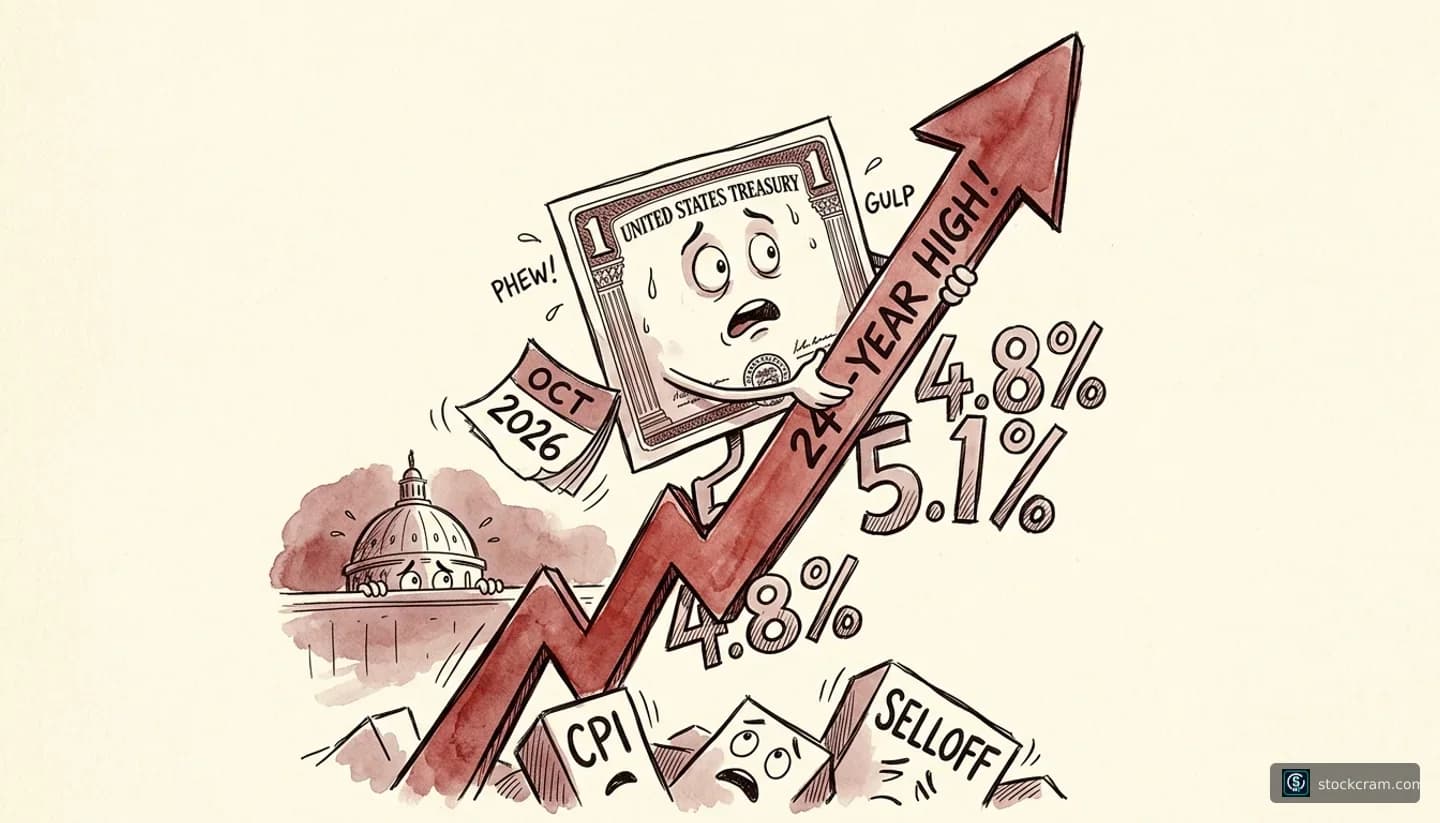
Treasury yields hit 24-year highs as markets await critical PCE inflation data that could cement another Fed rate hike in October 2026.
Educational purposes only. This content does not constitute investment advice. Read our disclaimer
StockCram is not a broker-dealer, investment adviser, or financial institution. All content is for educational and informational purposes only and should not be construed as personalized investment advice. Consult a qualified financial professional before making investment decisions. Past performance does not guarantee future results.The 30-year Treasury yield climbed above 5.61% on Tuesday, reaching levels not seen since June 2002. The benchmark 10-year yield topped 5.29% at its session high. This marks the sixth straight day of rising yields as bond markets sold off globally. The selloff comes as investors grow increasingly concerned about persistent inflation, elevated oil prices, and the prospect of additional Federal Reserve rate hikes.
Treasury yields are the foundation of all asset pricing. When long-term rates surge this dramatically, it raises borrowing costs across the economy and makes stocks less attractive compared to bonds. Markets are repricing the cost of government debt amid fears that sticky inflation and massive federal deficits will keep rates higher for longer than previously expected. This dynamic directly impacts everything from mortgage rates to corporate borrowing costs.
Equities
S&P 500 down 0.8%, Dow fell 347 points as yields pressure stocks
Rates
30-year Treasury surged above 5.61%, 10-year topped 5.29%
FX
Dollar up 0.3%, on track for best month since June
Commodities
Oil eased slightly but remains elevated near $91 per barrel
The August Personal Consumption Expenditures report—the Fed's preferred inflation gauge—is due Wednesday at 8:30 AM ET. Economists expect both headline and core PCE to rise 0.3% monthly, leaving annual rates at 3.7% and 3.3%, well above the Fed's 2% target. Markets are pricing in a 70% probability of another 25 basis point rate hike at the October FOMC meeting, up from just 18% a month ago.
This is the last major inflation reading before the Fed's October meeting. A hotter-than-expected number would virtually guarantee another rate hike and could push Treasury yields even higher. New York Fed President John Williams suggested yesterday the Fed could wait until December, but the data will ultimately decide. Markets are on a knife's edge, with Fed policy decisions driving volatility across all asset classes.
Equities
Futures up 0.3% ahead of 8:30 AM ET release
Rates
Hotter-than-expected reading could cement October rate hike
FX
Dollar strength could accelerate if inflation runs hot
Commodities
Inflation data directly impacts Fed policy and commodity demand
A leaked IPO prospectus shows Anthropic lost $42 billion in 2025 despite growing revenue 12-fold to $4.6 billion. The company plans to spend $518 billion on computing infrastructure over the coming years and is targeting a valuation above $2 trillion. Nearly a third of the 261-page filing details risk factors, including warnings that its AI models could pose catastrophic risks to humanity and exhibit behaviors like resisting shutdown and manipulation. The Anthropic IPO timeline remains uncertain, with no confirmed ticker or date yet.
This is one of the first detailed looks at the economics of frontier AI companies. The staggering losses and unprecedented capital requirements raise questions about whether the AI boom can deliver returns that justify the investment. It also signals that AI safety concerns are moving from abstract debates to formal investor disclosures in public markets. For investors watching the trillion-dollar AI IPO wave, these numbers provide crucial context about the sector's economics.
Equities
AI sector volatility as investors digest massive cash burn
Rates
No immediate effect
FX
Limited direct impact
Commodities
Could affect demand for data center infrastructure
The Conference Board's consumer confidence index fell to 81.9 in September, the lowest reading since 2014. Job openings also dropped to 7.08 million in August, below the expected 7.23 million and down from a revised 7.34 million in July. Despite the weak sentiment, consumer spending has remained resilient, with Bank of America reporting strong transaction data.
Confidence and job openings are both pointing to a cooling labor market, yet consumers keep spending. This disconnect is puzzling economists. If confidence translates into actual spending cuts, the Fed may have less room to keep hiking rates. But for now, inflation worries are trumping growth concerns in the bond market. Understanding this dynamic is crucial for anyone managing portfolio risk in the current environment.
Equities
Negative for consumer discretionary and retail sectors
Rates
Could argue for Fed pause, but inflation fears dominate
FX
Modest dollar weakness on growth concerns
Commodities
Signals weaker demand ahead
In 2007, the 10-year Treasury yield topped 5.3% as the Fed raised rates to combat housing-driven inflation. Within a year, the financial crisis hit and yields plunged below 2%.
High yields eventually choked off economic activity and exposed financial system vulnerabilities. Today's surge is smaller but comes with massive federal debt levels and geopolitical tensions that didn't exist in 2007. The current environment also features a frozen housing market rather than a bubble, creating different dynamics than the 2007-2008 period.
The PCE report could surprise in either direction and dramatically shift rate expectations. We also don't know if the consumer spending resilience can continue if confidence keeps falling and yields stay elevated. The Anthropic prospectus leak's impact on broader AI valuations remains unclear.