
Market Analysis
Stock Market Today, Oct 15: Hot CPI, Chip Rout
Read Article
Market Analysis
AI-powered insights into global financial markets
 StockCram Editorial3 min read
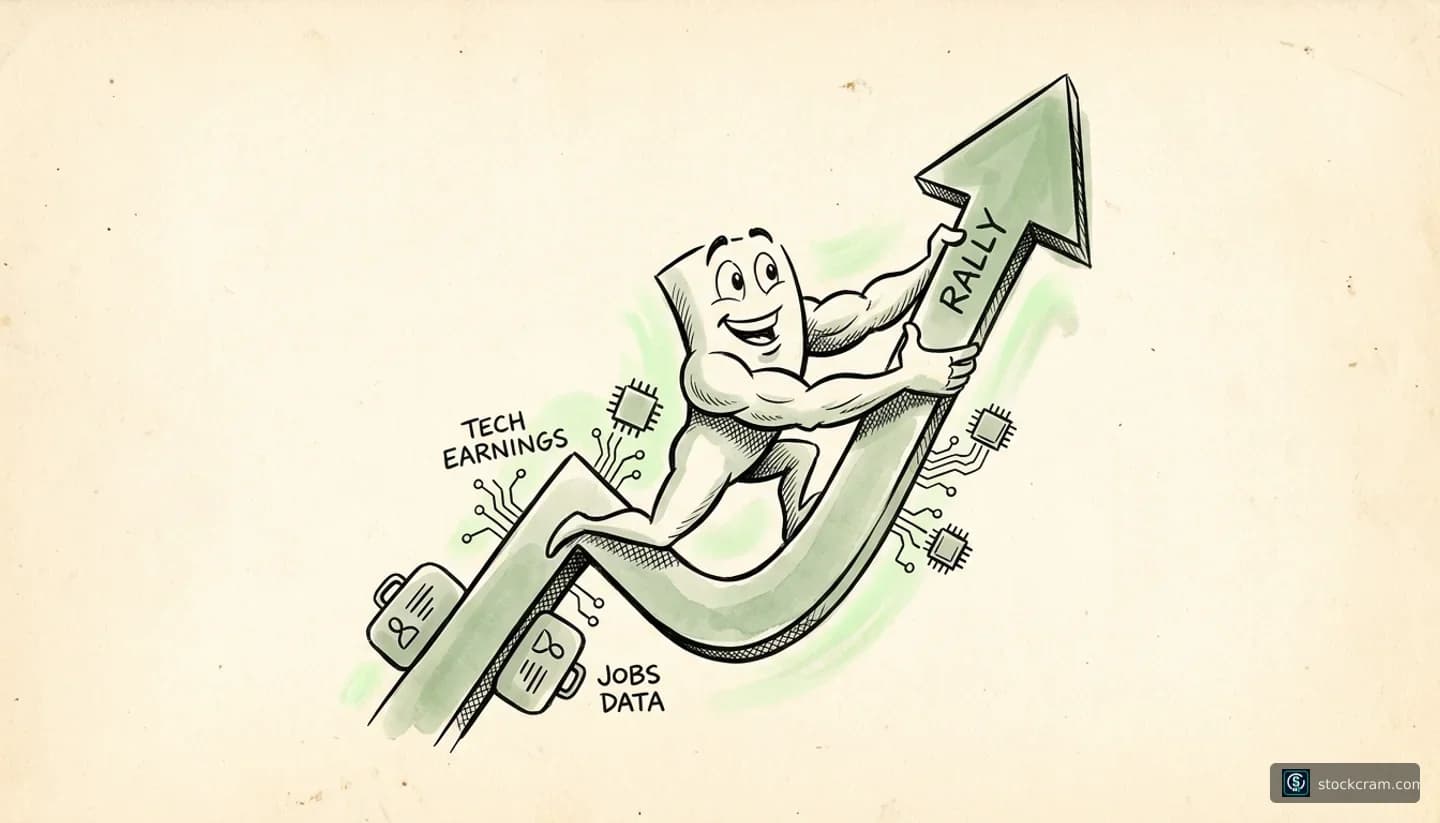
Stocks rallied 1-2% as jobless claims hit three-year lows and tech earnings topped forecasts, though oil jumped 4% on Middle East supply fears.
Educational purposes only. This content does not constitute investment advice. Read our disclaimer
StockCram is not a broker-dealer, investment adviser, or financial institution. All content is for educational and informational purposes only and should not be construed as personalized investment advice. Consult a qualified financial professional before making investment decisions. Past performance does not guarantee future results.The Labor Department reported initial unemployment claims fell to 198,000 for the week ending September 27, down 15,000 from the previous week and well below economist forecasts of 215,000. This marks the lowest reading in nearly three years and suggests the labor market remains tight despite recent Fed tightening.
Strong employment data reduces pressure on the Federal Reserve to cut interest rates aggressively, supporting the case for a 'soft landing' scenario where inflation cools without triggering recession. This shifts investor expectations and boosts confidence in economic durability, reinforcing the 'higher for longer' rate outlook that has defined 2026 markets.
Equities
Major indices up 1.2-1.5% on economic strength signals
Rates
Treasury yields rise 8-10 basis points as Fed cut bets fade
FX
Dollar strengthens moderately on labor market resilience
Commodities
Gold falls 1.8% as safe-haven demand weakens
Several leading technology firms reported third-quarter results that exceeded Wall Street expectations, with cloud computing and artificial intelligence services driving double-digit revenue growth. Companies cited continued enterprise investment in AI infrastructure and productivity tools as key growth drivers despite earlier concerns about spending slowdowns. The strong results validate the AI investment thesis that has powered market gains throughout 2026.
Tech sector earnings strength eases worries about a potential bubble and suggests corporate spending on technology remains robust even as interest rates stay elevated. Positive results from major tech companies provide concrete evidence that AI-driven revenue growth is sustainable, not speculative, giving investors confidence to maintain exposure to the sector despite elevated valuations.
Equities
Nasdaq jumps 2.1%, S&P 500 tech sector leads gains with 2.4% rise
Rates
Minimal movement, focus remains on economic data
FX
Limited direct impact, slight dollar support from risk appetite
Commodities
Copper and industrial metals gain on AI infrastructure demand
Crude oil jumped sharply after reports emerged of potential supply disruptions in the Persian Gulf region due to escalating tensions. Traders are pricing in geopolitical risk premiums as uncertainty threatens key shipping routes responsible for roughly 20% of global oil supply, including the critical Strait of Hormuz.
Higher energy prices could reignite inflation pressures just as the Fed appears close to declaring victory over price stability. A sustained oil rally would complicate monetary policy decisions and potentially squeeze consumer spending power heading into the holiday season, creating a headwind for the soft-landing narrative that has supported stock valuations.
Equities
Energy sector gains 3.2%, broader market mixed on inflation concerns
Rates
Slight upward pressure on inflation expectations
FX
Energy-linked currencies (CAD, NOK) strengthen against dollar
Commodities
WTI crude tops $78/barrel, natural gas rises 2.3%
The Conference Board's Consumer Confidence Index climbed to 108.5 in September, up from 105.8 in August and marking the third straight monthly gain. Improved job market perceptions and easing inflation concerns drove the increase, with consumers expressing greater willingness to make major purchases.
Rising consumer confidence supports the economic resilience narrative and suggests household spending—which accounts for roughly 70% of GDP—should remain healthy. This reduces recession risks but may keep the Fed cautious about cutting rates too quickly, as strong consumer demand could prevent inflation from cooling to the central bank's 2% target.
Equities
Consumer discretionary stocks rally 1.8%, retail sector outperforms
Rates
Reinforces higher-for-longer rate expectations
FX
Modest dollar support from domestic strength
Commodities
Limited impact, focus on energy and metals
The ECB kept its key interest rate unchanged at 3.75% and indicated it would proceed carefully with future policy adjustments. President Christine Lagarde emphasized that inflation risks remain elevated and that the central bank needs more evidence of sustained disinflation before easing monetary policy.
The ECB's cautious stance aligns with growing global central bank reluctance to cut rates prematurely. This coordination reduces currency volatility and supports the view that major economies are prioritizing inflation control over growth stimulus, creating a synchronized 'higher for longer' environment across developed markets.
Equities
European stocks dip 0.4% on rate cut delay disappointment
Rates
European bond yields rise, narrowing spread with US Treasuries
FX
Euro gains 0.6% against dollar on hawkish tone
Commodities
Minimal direct impact, euro strength affects dollar-denominated pricing
Similar jobless claims strength in early 2018 led the Fed to continue its tightening cycle, with four rate hikes that year despite market concerns about overtightening.
Equities rallied initially on economic strength but faced volatility in Q4 2018 as investors worried the Fed was moving too aggressively, ultimately leading to a policy pivot in early 2019.
Geopolitical risk premium in oil markets remains highly uncertain and could shift rapidly. The sustainability of consumer confidence gains depends on whether wage growth keeps pace with any renewed inflation from energy prices.