
Market Analysis
Why Did Stocks Fall Nov 6? AI Selloff, Jobs
Read Article
Market Analysis
AI-powered insights into global financial markets
 StockCram Editorial7 min read
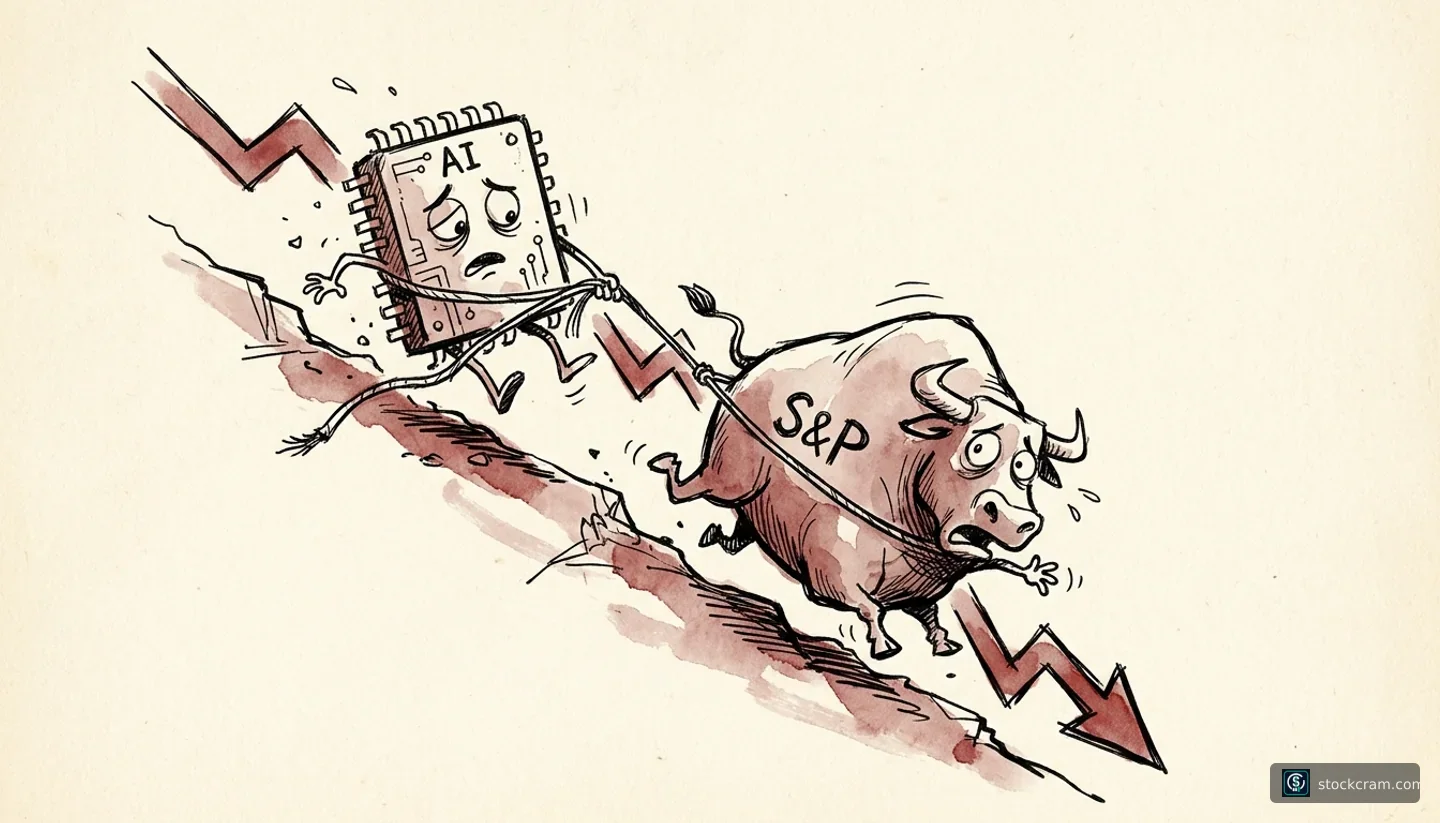
A Thursday AI and chip sell-off pushed the S&P 500 to its worst week since April 2025, as oil fell and a strong jobs report raised rate-hike odds.
Week of Monday, November 2, 2026 - Friday, November 6, 2026
-2.7%
7,376.86
-3.4%
24,579.42
-0.9%
51,285.73
-2.1%
2,758.64
25.64
+32.0%
4.87%
Roughly flat to higher; +0.03% on Friday
$90.83
-13.0%
$4,045
+4.0%
102.0
About flat (-0.1% to +0.1%)
Democrats won majorities in both chambers of Congress. Investors first rallied, then worried that stricter rules on AI data centers could slow spending on chips and servers. Thursday's chip sell-off was among the sharpest on record for the sector.
The Philadelphia Semiconductor Index fell about 12% Thursday and all 11 S&P 500 sectors closed lower. Chip stocks bounced Friday, but sentiment stayed fragile.
The Fed raised rates in September and held at 3.75%–4.00% in October. Friday's jobs report beat forecasts by a wide margin. Futures markets now put the odds of a December hike near 77%.
The 10-year Treasury yield rose to about 4.87% and the dollar strengthened. Gold gave back some gains. Analysts noted that higher yields can weigh on bonds and stocks alike.
Reports of stepped-up US-Iran diplomacy pushed crude to its steepest weekly drop since 2020. No deal has been announced, and tanker attacks near the Strait of Hormuz resumed Friday.
Lower oil eased some inflation worries and hit energy shares. Some analysts warn that fighting could resume and lift prices again.
On Thursday, the Nasdaq Composite fell 5.5% and the Nasdaq-100 fell 6.36%, its worst day since March 2020. Nvidia fell about 9% and Micron about 17.5%. Roughly $2 trillion in Nasdaq market value disappeared in one session.
Tech shares rebounded Friday. Nvidia rose more than 3% and Micron about 5%.
Some analysts argue the selling was driven by fear of rules that are not yet written. They note AI demand and company spending plans have not changed yet.
Other analysts say the sell-off shows how crowded the AI trade had become. They warn that new data-center rules could slow growth and that buyers have not clearly returned.
Employers added 165,000 jobs in October versus about 65,000 expected. The unemployment rate fell to 4.1%. Earlier months were revised up by a combined 84,000 jobs.
Yields and the dollar rose. Odds of a December Fed hike climbed to about 78%.
Supporters say hiring strength points to a resilient economy and wage growth of 3.1% a year is moderate.
Skeptics note the report gives the Fed more room to raise rates while inflation runs near 3.7%. They also say jobs data is often revised.
Brent fell more than 16% to $98.32 and WTI fell nearly 13% to $90.83. Traders bet on a US-Iran deal. Rapidan Energy's Bob McNally told CNBC he sees an 80% chance fighting resumes.
Energy shares and Latin American oil producers fell. Lower crude eased pressure on inflation expectations.
Optimists say a deal could reopen shipping lanes and cool energy prices.
Cautious analysts say no agreement exists, tanker attacks continue and prices could jump again.
Chip and AI stocks bounced after Thursday's drop of about 7%. Weekly sector figures were still negative.
Gold rose after the election and a weaker dollar early in the week. It slipped Friday as the dollar rose.
Fears of slower AI data-center spending hit Nvidia, Micron, AMD and SanDisk hardest.
Crude dropped on US-Iran peace hopes. Energy firms tied to the AI build-out also fell Thursday.
Shares rebounded after Thursday's 9% drop. They are still down for the week.
Shares bounced after a 17% decline Thursday.
The company reported a surprise profit and a raised outlook for the year.
The company reported a wider loss and revenue below estimates.
Memory and chip stocks fell on fears of slower data-center spending.
Memory chip makers were among the hardest hit by the AI sell-off.
Expected: About +65,000
A big beat. Markets raised odds of a December Fed hike.
Expected: 4.2%
A tight labor market gives the Fed room to focus on inflation.
Expected: Slightly lower, according to economists
Wage gains were a bit firmer than hoped.
Expected: Hold
The Fed paused after its September hike. Two members voted for a hike. Futures markets lean toward a December increase.
The S&P 500's 2.7% weekly drop was its biggest since the April 2025 tariff shock. The Nasdaq-100's Thursday decline was its worst day since March 2020.
Past corrections have varied widely. Some faded within weeks and others grew into longer declines. History offers context, not a forecast. Readers can learn more about managing risk and how index funds track the broad market.
November 3–5, 2026
Democrats won majorities in the House and Senate. Investors began weighing possible new rules on AI data centers.
Market Relevance
Stocks rallied Wednesday, then sold off sharply Thursday as AI policy worries took over.
Ongoing. Specific policy proposals have not been released.
November 2–6, 2026
Reports of intensified talks to end the eight-month conflict pushed oil sharply lower. No deal has been announced, and attacks on tankers resumed Friday.
Market Relevance
Oil fell about 13% to 16% for the week. Energy shares and inflation expectations both moved.
Ongoing. Analysts are divided on whether talks succeed or fighting resumes.
Thursday, November 5, 2026
The semiconductor index fell about 12%, among its worst days on record. Magnificent Seven stocks lost about $1 trillion in value that day.
Market Relevance
The Nasdaq entered correction territory and volatility spiked. Chip shares partly recovered Friday.
Ongoing. Markets remain sensitive to AI policy news.
Friday, November 6, 2026
A strong October jobs report lifted Treasury yields and the dollar. Futures markets priced about a 77% to 78% chance of a December hike.
Market Relevance
Gold slipped and rate-sensitive areas of the market came under pressure.
Ongoing. Upcoming inflation data will shape expectations.
Disclaimer: This weekly recap is for educational purposes only and does not constitute investment advice. Past performance is not indicative of future results. Always consult with a qualified financial advisor before making investment decisions.