
Market Analysis
Markets This Week: Oil Spike, Tech Selloff
Read Article
Market Analysis
AI-powered insights into global financial markets
 StockCram Editorial4 min read
The Nasdaq fell 2.6% on Oct 22 as AI spending worries hit tech, while oil topped $100 and the 10-year Treasury yield dropped below 5%.
Educational purposes only. This content does not constitute investment advice. Read our disclaimer
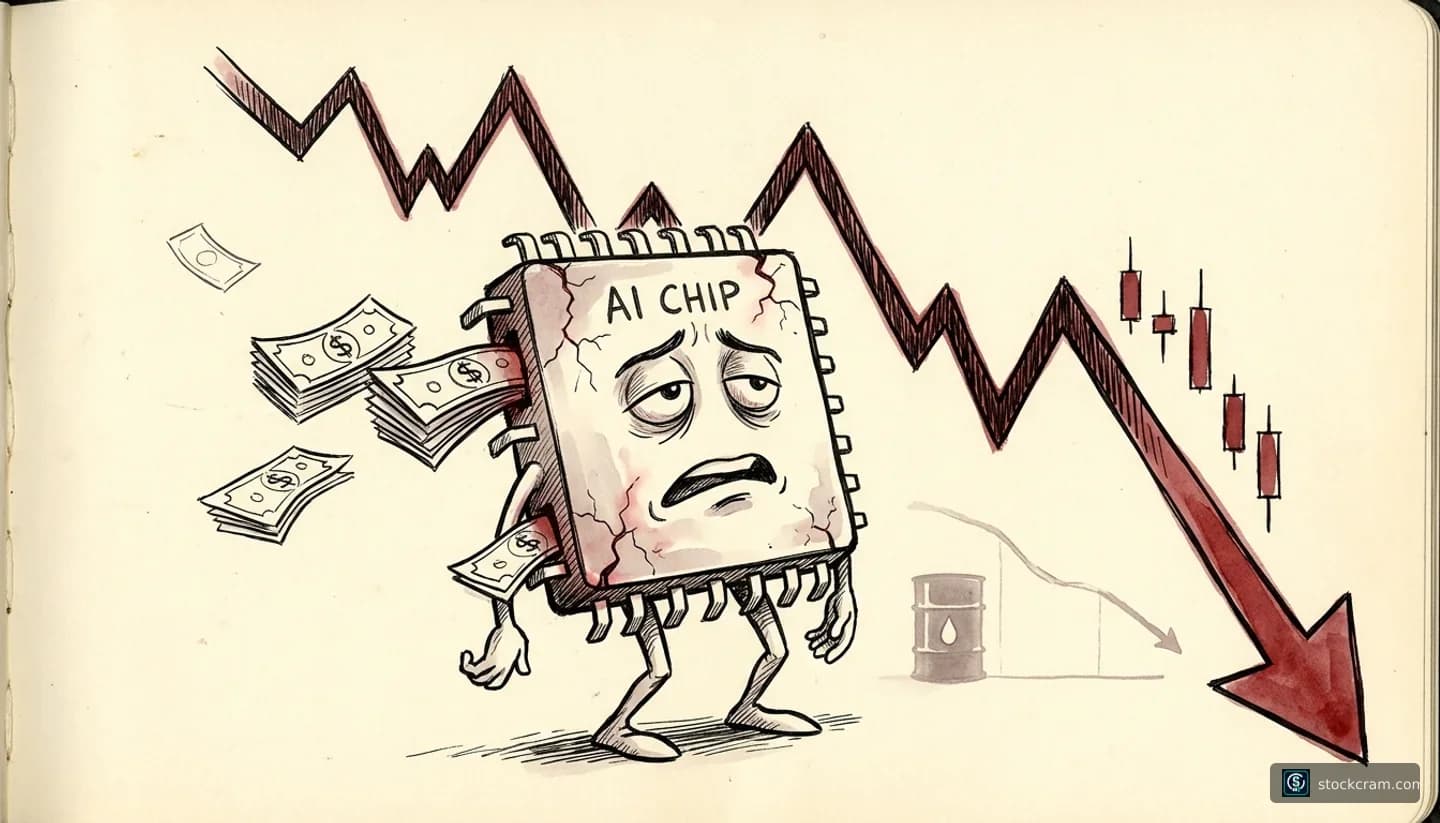
StockCram is not a broker-dealer, investment adviser, or financial institution. All content is for educational and informational purposes only and should not be construed as personalized investment advice. Consult a qualified financial professional before making investment decisions. Past performance does not guarantee future results.The Nasdaq Composite fell 2.6% to 26,008.86 on Thursday, its worst day since early June, as renewed worries about AI spending hit big tech after Meta and Tesla earnings. The S&P 500 lost 1.21% to 7,663.43, its worst day since July, while the Dow Jones Industrial Average finished flat, up 0.02%. Meta Platforms fell about 7% even though its revenue beat forecasts, because it reported its first cash outflow in more than a decade from AI spending and announced non-voting shares in a 2-for-1 split to raise money. Tesla cut its yearly capital spending forecast. The Philadelphia Semiconductor Index fell 5.6% to its lowest level since July 29.
Investors are now asking how much AI spending will pay off, not just how strong sales are. That question is at the center of the debate over whether we are in another AI bubble. The weakness in big tech masked gains in much of the rest of the market.
Equities
Nasdaq Composite fell 2.6% to 26,008.86 and the S&P 500 fell 1.21% to 7,663.43. The Dow was roughly flat, up 0.02%.
Rates
Safe-haven buying pushed Treasury yields sharply lower.
FX
Little changed; no major currency move was reported.
Commodities
Oil rose, and gold and silver fell.
The US 10-year Treasury yield fell about 17 basis points to 4.95% on Thursday, dropping below 5% for the first time since September 23, as investors bought government bonds while tech and AI shares fell. Investors treated Treasuries as a safe place to park money. Five- to 30-year yields reached their lowest levels in nearly a month. Bond prices rise when yields fall (see our glossary for more).
Bonds acted as a haven even with oil prices higher. Falling yields lower borrowing costs, which is why homebuilders gained, though a frozen housing market depends on more than one day's move in yields.
Equities
Homebuilders rallied: the iShares U.S. Home Construction ETF rose 4.5%.
Rates
The 10-year yield fell about 17 basis points to 4.95%. The 2-year fell 17 basis points to 4.63% and the 30-year fell 13 basis points to 5.28%.
FX
Lower US yields reduce the pull on the dollar; no large move was reported.
Commodities
Oil rose even as yields fell.
December West Texas Intermediate crude futures rose back above $100 a barrel in Asian trading on October 22, and Brent traded around $109, on reports of possible US and Israeli strikes on Iran. Reports said the US and Israel are weighing a three-day air campaign against Iran after next month's US midterm elections. Iran warned it could hit Gulf oil facilities, including Saudi Aramco sites. Brent jumped 27.9% in a single week when attacks began last February.
Higher oil prices feed into gasoline and shipping costs. That makes inflation harder for the Federal Reserve to bring down. For background on how war risk moves crude, see our explainer on oil prices during war and the Strait of Hormuz.
Equities
Rising oil added to the pressure on stocks during the Thursday selloff.
Rates
Higher oil raises inflation worries, but Treasury yields still fell on the day.
FX
No major currency move was reported.
Commodities
December WTI crude rose back above $100 a barrel and Brent traded near $109 in Asian hours. Brent was about $113.61 on October 23.
US weekly jobless claims fell by 6,000 to 194,000 in the week ended October 17, a three-month low, the Labor Department reported, below the 200,000 economists expected. The prior week's figure was 200,000. Claims are near 57-year lows. Prediction markets priced a 91.5% chance of no Fed change on October 28 and an 8.5% chance of a quarter-point hike.
A steady job market gives the Fed less reason to change interest rates quickly. Layoffs are still low even as inflation stays high. New to the topic? Read what the Federal Reserve does and how it sets rates.
Equities
Little direct effect; the tech selloff dominated.
Rates
Supports expectations that the Fed holds rates at its October 27-28 meeting.
FX
No major currency move was reported.
Commodities
No direct effect reported.
Lockheed Martin shares rose about 7% on Thursday after the defense contractor reported earnings, and Spotify rose 9% after its report, as parts of the market held up during the tech slide. The gains came as the Dow stayed flat while the Nasdaq fell 2.6%. Tesla ended down about 3% in late trading.
The selloff was concentrated in AI-linked tech stocks. Other sectors, including defense and homebuilders, moved on their own news.
Equities
Lockheed Martin rose about 7% and Spotify rose 9%, while most US stocks outside tech held up better than the Nasdaq.
Rates
Not directly affected.
FX
No major currency move was reported.
Commodities
No direct effect reported.
A tech and AI spending scare earlier this month: on October 15, 2026, a global rout in tech hardware stocks hit Nvidia, AMD and Dell over AI funding worries.
Tech shares dropped sharply, then rebounded on October 21 after strong results from SpaceX and Super Micro, before sliding again on Thursday. Tech stocks have swung widely on each new earnings report. Learn more about how this works in our [stock basics guide](/basics/what-are-stocks).
Friday's trading session was still under way, so figures reflect Thursday's close. Meta's move was reported as 5% to 8% at different times of day. Reports of possible US and Israeli strikes on Iran are unconfirmed and could change quickly. Fed expectations come from prediction markets, not official guidance.