
Market Analysis
Markets This Week: Oil, AI Selloff, Meta, Tesla
Read Article
Market Analysis
AI-powered insights into global financial markets
 StockCram Editorial3 min read
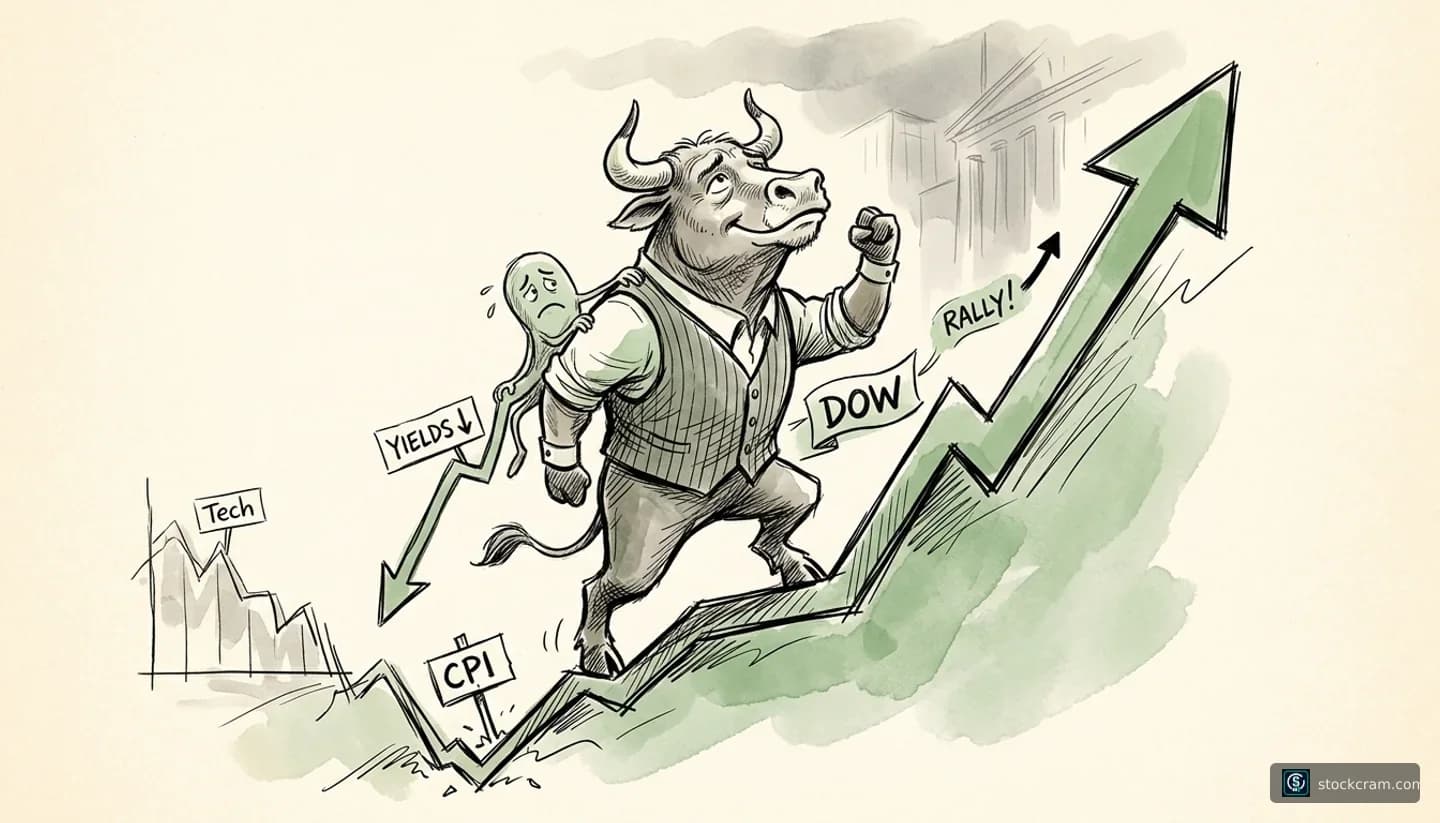
Hot inflation data rattled tech on Wednesday, but a drop in Treasury yields helped the Dow jump more than 500 points on Thursday.
Educational purposes only. This content does not constitute investment advice. Read our disclaimer
StockCram is not a broker-dealer, investment adviser, or financial institution. All content is for educational and informational purposes only and should not be construed as personalized investment advice. Consult a qualified financial professional before making investment decisions. Past performance does not guarantee future results.The Labor Department's September producer price index (PPI), which tracks what businesses pay for goods and services, rose 1.3% on the month and 6.3% from a year earlier, both above forecasts of 0.6% and 5.5%. Core prices, which leave out food and energy, rose 0.7% on the month and 5% on the year. A day earlier, the consumer price index rose 0.6% in September and 3.7% from a year earlier, versus 3.4% in August and a 3.6% forecast, as gasoline jumped 9.1%.
Higher prices raise the odds that the Federal Reserve lifts interest rates again, which makes borrowing costlier for companies and households. For background on why the Fed weighs monthly trends against annual headlines, read why the Fed might raise rates, and see our stock market glossary for terms like CPI and PPI.
Equities
Early losses on Thursday, then a rebound by the close
Rates
10-year Treasury yield fell about 11 basis points on Thursday to roughly 5.09%, after the hot data
FX
Not a major driver in the sources reviewed
Commodities
Fuel costs were the main driver of the price jump
CoreWeave shares fell about 16% on Wednesday as yields on its bonds jumped close to 15%, reflecting worry that tech firms are borrowing too much to build AI data centers. Oracle closed down nearly 9%, and Nebius and Dell also fell. CoreWeave's credit rating is B+ at S&P, which is below investment grade.
When interest rates rise, heavily indebted companies pay more to refinance their loans, so debt-funded AI spending looks riskier. For both sides of the debate, see our beginner's guide asking are we in another AI bubble?
Equities
Nasdaq fell 1.88% to 26,692.87 and the S&P 500 fell 1.11% to 7,718.94 on Wednesday
Rates
CoreWeave's 2031 and 2032 bond yields rose close to 15%
FX
No notable move reported
Commodities
No notable move reported
The Dow Jones Industrial Average gained 556.21 points, or 1.08%, to close at 52,177.69 on Thursday, October 15. The S&P 500 rose 0.33% to 7,744.06 and the Nasdaq Composite edged up 0.08% to 26,713.03, recovering from steep early losses. Investors rotated out of AI-linked names and into defensive stocks as Treasury yields dropped.
Falling yields eased some of the pressure from the inflation data. The gains were uneven, with the Dow far ahead of the Nasdaq. To see how rates and stock prices interact, read why stocks can rise when interest rates are high.
Equities
Dow +1.08% to 52,177.69; S&P 500 +0.33% to 7,744.06; Nasdaq +0.08% to 26,713.03
Rates
10-year yield fell to about 5.09%, its lowest close since September 22, from about 5.19% on Wednesday
FX
No notable move reported
Commodities
Brent crude settled near $106 a barrel
U.S. retail sales rose 0.8% in September, the Commerce Department said Thursday, beating the 0.3% economists expected, after a revised 1.3% gain in August. Excluding gas stations, sales rose only 0.2%. Restaurants rose 1.1%, and online retailers rose 0.3%. Separately, weekly jobless claims ticked up 1,000 to 199,000.
Steady spending and low layoffs show the economy is holding up, but much of the sales gain came from pricier gasoline.
Equities
Mixed, with the broad rebound driven by falling yields
Rates
Strong spending adds to rate-hike worries
FX
No notable move reported
Commodities
Higher gasoline prices lifted the total
The International Energy Agency agreed Thursday to release more than 20 million barrels of diesel, plus any oil left from a record emergency release pledged in March. Brent crude settled near $106 a barrel, down 0.1%, while WTI, the U.S. benchmark, rose about 3%. Supply risks run from the Strait of Hormuz to the Black Sea.
Oil and fuel prices are a main reason inflation is running hot, so supply news moves interest-rate expectations as well as energy prices. Our explainer on oil prices and the Strait of Hormuz covers the supply risks in more detail.
Equities
Energy costs remain a pressure point for consumers and companies
Rates
Oil-driven inflation is feeding rate expectations
FX
No notable move reported
Commodities
Brent settled near $106 a barrel, down 0.1%; WTI rose about 3%
In 2022, inflation readings kept coming in above forecasts, and the Fed raised rates aggressively. Wholesale prices were also rising at a pace last seen then, with September's 6.3% annual gain the largest since 2022.
Stocks fell sharply through much of 2022 as higher rates cut into growth and tech valuations. Moves in rates, not any single report, drove the big swings.
Today's Friday session was not complete when this was written, so the latest full close is Thursday's. Sources differ on some figures, such as 10-year yield levels and Brent prices. Fed rate-hike odds have shifted quickly, and the cause of Wednesday's AI selloff mixes inflation, rates and company-specific debt worries.