
Market Analysis
Stock Market Today, Oct 15: Hot CPI, Chip Rout
Read Article
Market Analysis
AI-powered insights into global financial markets
 StockCram Editorial4 min read
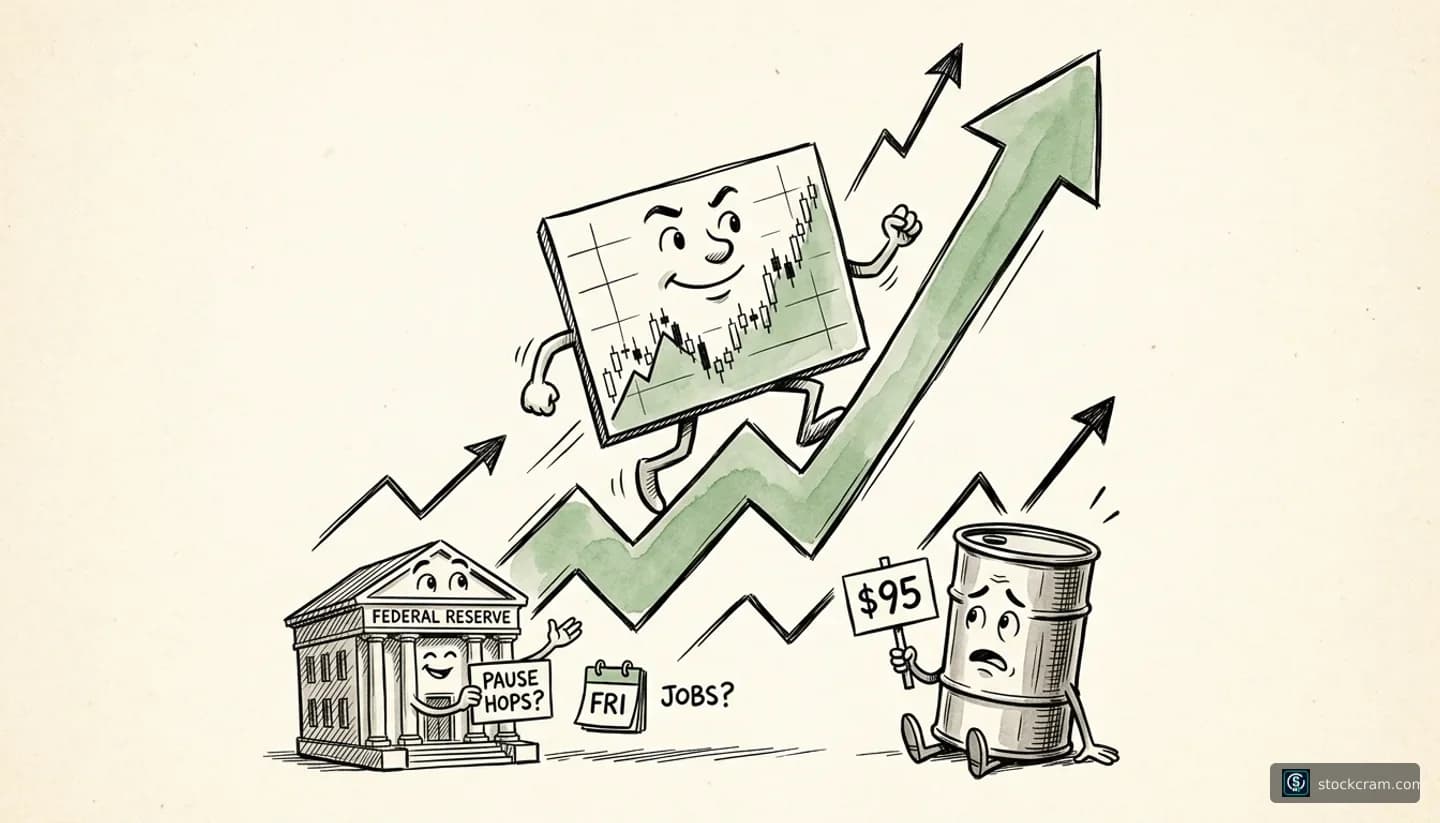
Markets rallied as Fed rate-hike fears cooled, but Friday's jobs report will test whether inflation pressures are truly easing. Oil above $95 complicates the picture.
Educational purposes only. This content does not constitute investment advice. Read our disclaimer
StockCram is not a broker-dealer, investment adviser, or financial institution. All content is for educational and informational purposes only and should not be construed as personalized investment advice. Consult a qualified financial professional before making investment decisions. Past performance does not guarantee future results.Fed Governor Christopher Waller said Thursday he would likely support keeping rates unchanged at the September 15-16 meeting if upcoming inflation data continues showing progress toward the Fed's 2% goal. His comments caused the odds of a September rate hike to fall from nearly 65% to roughly 50-50. The Dow climbed 1.3% and the S&P 500 rose 1% in their best performance since August 4, as investors welcomed the shift in Fed policy expectations.
Waller's dovish tone contrasts sharply with Chairman Kevin Warsh's hawkish Jackson Hole speech last week that had sent bond yields surging. The Fed's next move now hinges entirely on the August inflation report due September 11, creating a knife-edge decision that will determine whether borrowing costs rise further or stabilize for American consumers and businesses. This uncertainty highlights why understanding Fed independence and policy signals matters for your portfolio.
Equities
S&P 500 up 1.06%, Dow up 1.18%, Nasdaq up 1.4% - best day since August 4
Rates
10-year Treasury yield dropped to 4.73%, down 5 basis points
FX
Dollar down 0.55% as rate-hike odds fell from 65% to 50%
Commodities
Gold and Bitcoin gained on weaker dollar expectations
A new round of US airstrikes on Iran sent oil prices jumping in midafternoon trading Tuesday, with Brent crude crossing above $94 per barrel and WTI rising 4.5% toward $90. Oil steadied near five-week highs as the US conducted another round of strikes overnight, with Iran retaliating against Jordan, Bahrain and Kuwait. The International Energy Agency cut its 2026 global oil supply forecast to 102 million barrels per day, a decline of 4.3 million barrels per day, citing the breakdown of the ceasefire and renewed closure of the Strait of Hormuz.
Rising energy costs threaten to reverse the recent inflation progress that has markets hoping for a Fed pause. The conflict puts the Fed in a bind: higher oil prices could force rate hikes just as the labor market weakens, raising the risk of a policy mistake that tips the economy into recession. Investors wondering how to respond to war headlines should understand that geopolitical oil shocks create unique challenges for monetary policy.
Equities
Energy sector outperformed, tech lagged on Monday and Tuesday
Rates
10-year yield hit highest since January 2025 earlier this week on inflation fears
FX
Dollar volatility as safe-haven demand battles inflation concerns
Commodities
Brent crude above $95, WTI near $90 - highest in five weeks
The August jobs report due Friday is expected to show growth of just 53,000 nonfarm payrolls, a step up after July's loss of 23,000 but still marking what has been a relatively jobless summer. The labor market has been in a low-hire low-fire environment impacted by geopolitical uncertainty, AI investment and other factors. The US economy is expected to have added 56,000 jobs in August with the unemployment rate remaining unchanged at 4.1%, hovering near a one-year low.
Citi sees just 20,000 new jobs with unemployment potentially ticking up to 4.2%, though economists expect the Fed will view those numbers as stable and not cause for broader concern. This report will heavily influence whether the Fed views the labor market as resilient enough to withstand another rate hike or weak enough to justify a pause. The data will be a critical input for the Fed's September meeting decision.
Equities
Mixed - weak jobs support rate pause but signal economic slowdown
Rates
Poor employment numbers may ease rate-hike pressure
FX
Weak jobs data could weaken dollar if it shifts Fed expectations
Commodities
Lower growth expectations could pressure industrial metals
Dell Technologies became the best performing stock in the S&P 500, up 13% after it beat estimates and lifted its fiscal 2027 forecast on AI server strength. Broadcom gave a disappointing revenue forecast for the current quarter despite fiscal third-quarter results that topped estimates, with earnings of $3.32 per share versus $3.24 expected and revenue of $29.59 billion. Snowflake dropped 4% ahead of earnings but later surged 22% on healthy results, while the company has been up about 40% in 2026.
The divergence in tech earnings shows that AI infrastructure spending remains robust, but investors are becoming more selective about valuations. Companies demonstrating clear AI revenue growth are rewarded, while those merely promising future benefits face skepticism - a sign the market is maturing beyond the initial AI hype cycle. For context on the broader AI investment landscape, see our analysis of whether we're in an AI bubble.
Equities
Tech sector volatility - AI infrastructure strength vs valuation concerns
Rates
No significant effect
FX
Limited direct impact
Commodities
Increased demand for energy from AI data centers
In August 2019, markets similarly whipsawed on mixed Fed signals when some governors favored rate cuts while Chair Powell remained non-committal, creating a 50-50 market pricing similar to today's uncertainty.
The Fed ultimately cut rates in September 2019, and the S&P 500 rallied 1.7% on the announcement. However, the context differs - 2019 saw preemptive cuts amid growth concerns, while 2026 faces persistent inflation with geopolitical oil shocks complicating the picture.
Tomorrow's jobs report could surprise in either direction given July's unexpected 23,000 job loss. The Iran conflict remains unpredictable and could send oil prices sharply higher or lower. Fed Chair Warsh's ultimate decision remains unclear despite Waller's dovish comments, as the September 11 inflation report will be the deciding factor.