
Market Analysis
Stock Market Today, Oct 15: Hot CPI, Chip Rout
Read Article
Market Analysis
AI-powered insights into global financial markets
 StockCram Editorial3 min read
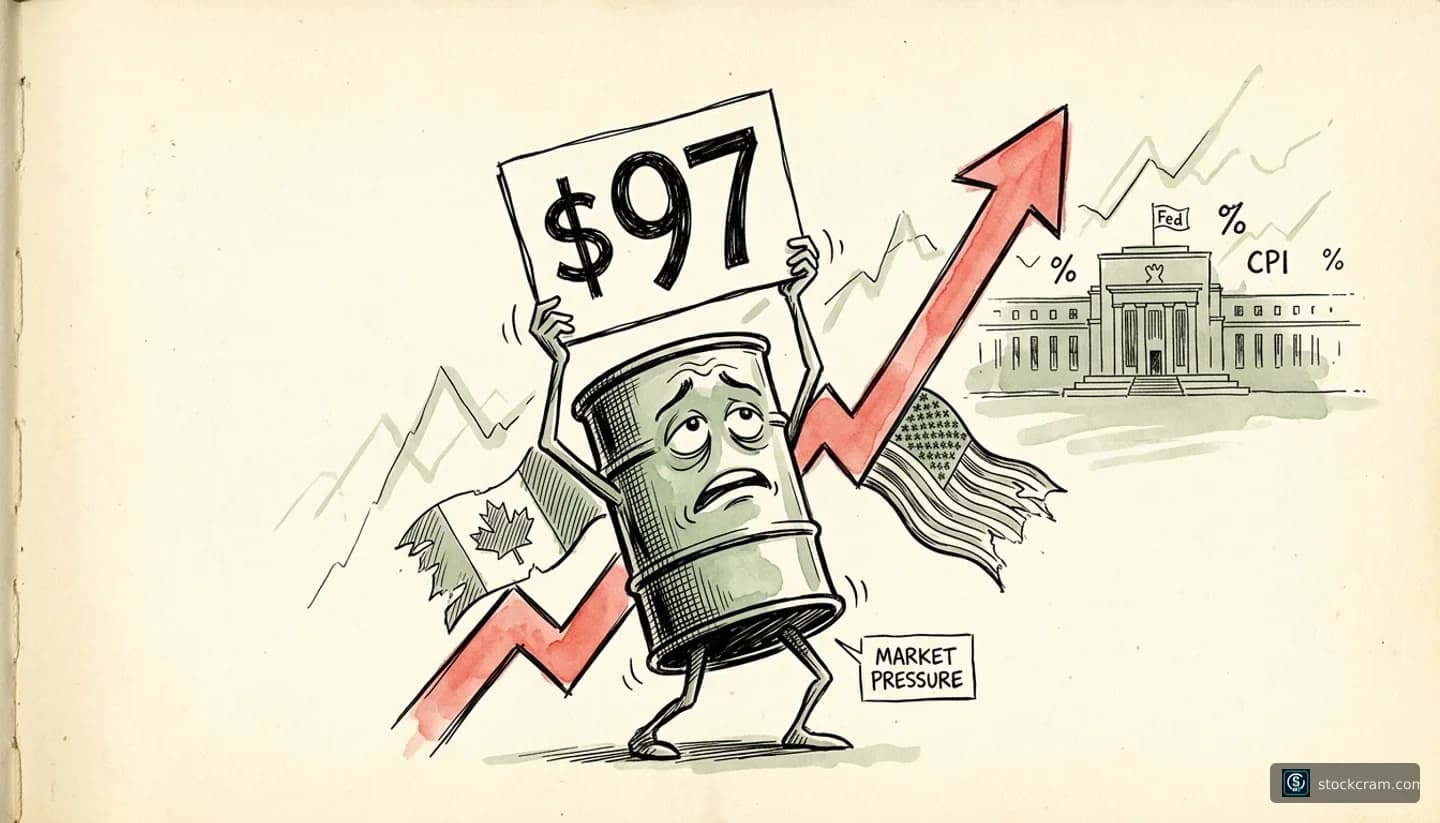
Markets return from Labor Day facing oil near $97, Canada's $20B tariff retaliation, and tech giants sliding on 60% odds of a September Fed rate hike.
Educational purposes only. This content does not constitute investment advice. Read our disclaimer
StockCram is not a broker-dealer, investment adviser, or financial institution. All content is for educational and informational purposes only and should not be construed as personalized investment advice. Consult a qualified financial professional before making investment decisions. Past performance does not guarantee future results.Oil prices climbed for a third straight session after reports that US forces struck Iranian oil tankers over the weekend and Iran threatened retaliation. Brent crude is trading near $97.20 per barrel while WTI reached $92.56, with Goldman Sachs raising its December forecast by $5 per barrel citing persistent Middle East shipping disruptions through 2027.
Rising oil prices reignite inflation fears just as the Fed debates rate hikes. Energy stocks are soaring—hitting all-time highs—but higher fuel costs squeeze consumer spending and corporate margins across every other sector. If oil breaks $100, the Fed's hand may be forced toward tightening despite economic uncertainty.
Equities
Energy stocks hit all-time highs; broad indexes down 0.15-0.38%
Rates
10-year Treasury yield near 4.82%, multi-year highs
FX
Dollar mixed; safe-haven flows offset inflation concerns
Commodities
Brent crude near $97.20, WTI at $92.56—both at six-week highs
Canada's retaliatory tariffs on $20 billion worth of US goods officially went into effect at 12:01 AM today, targeting steel, dairy, electronics, appliances, and agricultural equipment. The tariffs—ranging from 15% to 50%—match the duties President Trump imposed on Canadian imports in August after bilateral trade talks collapsed.
This escalates the US-Canada trade war and adds costs for businesses on both sides of the border. Over 700 products are now caught in the crossfire, threatening supply chains and raising prices for American consumers. Markets worry this could spread to other trading partners, creating additional headwinds for corporate earnings.
Equities
US industrials, steel, and agricultural equipment stocks face headwinds
Rates
No direct impact, but trade tensions add to growth uncertainty
FX
Canadian dollar under pressure; USD/CAD volatility elevated
Commodities
Dairy and steel prices may see regional distortions
Big Tech led Monday's decline as investors digested Fed Chair Kevin Warsh's hawkish Jackson Hole speech and Friday's stronger-than-expected jobs report. The S&P 500 fell 0.15% to 7,707 points, with losses concentrated in mega-cap technology stocks. Markets now price a 60% probability the Fed will raise rates by 25 basis points at its September 15-16 meeting.
Tech stocks are especially vulnerable to higher rates because their valuations depend on future earnings, which are worth less when discounted at higher interest rates. If the Fed does hike in September, it would mark a surprise tightening cycle and could trigger a broader market correction—a scenario that makes downside protection strategies worth understanding.
Equities
Apple -2.55%, Alphabet -2.10%, Microsoft -2.05%; Nasdaq underperforms
Rates
Fed funds futures price 60% chance of September hike
FX
Dollar strengthens on hawkish Fed expectations
Commodities
Gold under pressure from rising real yields
Friday's August jobs report showed nonfarm payrolls grew by 162,000—triple the 53,000 economists expected—while unemployment held steady at 4.1%. The surprise strength gave the Fed more room to raise rates without worrying about breaking the labor market, sending Treasury yields soaring to levels not seen since November 2023.
Wall Street had been counting on weak jobs data to keep the Fed on hold. Instead, the strong report removed the Fed's last excuse not to hike. Three FOMC members already voted for a rate increase in July; now the hawks have fresh ammunition, and markets are scrambling to reprice expectations for the September meeting.
Equities
Credit-sensitive sectors pull back sharply
Rates
Treasury yields spike; 10-year hits 4.82%
FX
Dollar gains on rate expectations
Commodities
Industrial metals weaken on growth concerns
In early 2022, the Fed began its most aggressive rate-hike cycle in 40 years after inflation surged past 9%. Markets initially rallied on strong jobs data before realizing higher rates would persist longer than expected.
The S&P 500 fell 25% from peak to trough in 2022 as the Fed hiked rates from near-zero to over 5%. Tech stocks were hit hardest, with the Nasdaq dropping 36%. The lesson: strong economic data can be bad news when the Fed is worried about inflation—a dynamic that may be repeating in September 2026.
The Fed's September decision remains uncertain despite hawkish signals. Middle East tensions could escalate or de-escalate rapidly, swinging oil prices by $10+ in either direction. Canada-US trade negotiations could resume or deteriorate further.