Is the Housing Market Crashing in 2026? Why It Feels Frozen Instead
Is the housing market crashing in 2026? The truer answer: it's frozen, not crashing. The lock-in effect, both sides, in plain English.
Gold rose roughly 4% in a single session after the U.S. Treasury unexpectedly doubled its bond buyback program on August 19, 2026. Then yields reversed and gold kept climbing anyway. This explains the links between buybacks, yields, the dollar and gold prices, and what the surprise timing did and did not tell us about fiscal credibility.
Educational purposes only. This content does not constitute investment advice. Read our disclaimer
StockCram is not a broker-dealer, investment adviser, or financial institution. All content is for educational and informational purposes only and should not be construed as personalized investment advice. Consult a qualified financial professional before making investment decisions. Past performance does not guarantee future results.
On August 19, 2026, two markets that beginners rarely connect moved together. Long-term Treasury yields dropped, and gold shot higher. The trigger was an announcement from the U.S. Treasury that most people outside the bond market had never heard of, about a program most people outside the bond market did not know existed.
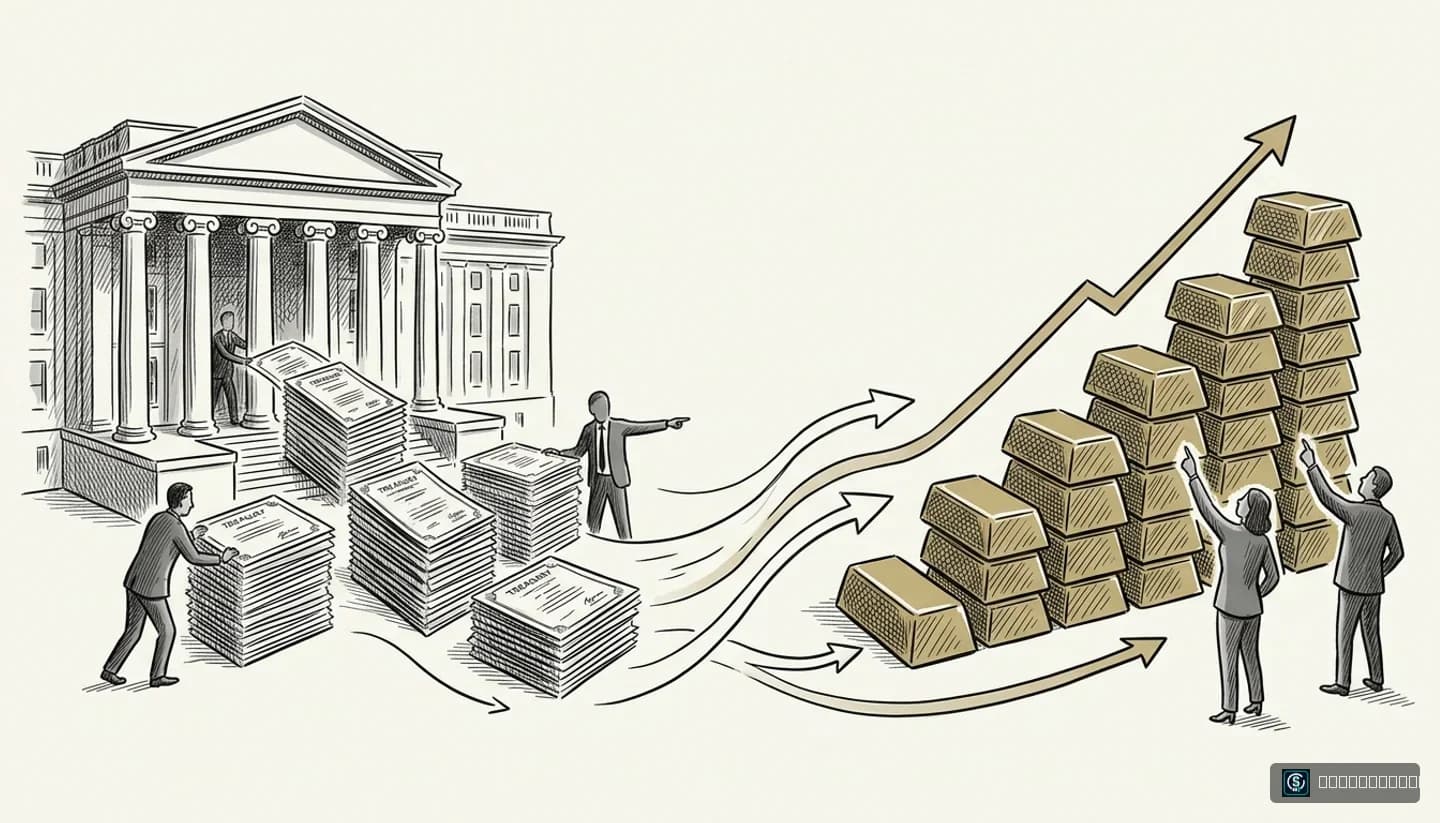
Gold rose about 4% on August 19, 2026, the day the U.S. Treasury announced it would double its bond buyback program to $4 billion per operation (Bloomberg, August 19, 2026). Traders cited lower long-end yields, a softer dollar, positioning and fiscal concerns. Falling yields lower the opportunity cost of holding non-yielding gold, and the surprise mid-quarter timing was read by some as a signal of fiscal stress, reviving the 'debasement trade' in which investors buy gold as protection against currency weakness and debt concerns.
The benchmark 10-year Treasury note closed down 5.7 basis points to 4.647% and the 30-year bond tumbled 9 basis points to 5.196% on August 19, 2026, following the Treasury Department's morning announcement. Gold settled sharply higher, and silver rose with it.
Treasury announced it was increasing, by at least double, the size of liquidity support buyback operations for longer-dated nominal coupon securities (the 10-year to 20-year sector and the 20-year to 30-year sector). The current maximum size of $2 billion per operation would be at least $4 billion per operation. This change was effective September 9, 2026 and would be in effect for the remainder of the refunding quarter (through November 4, 2026).
Bond markets were under real strain when it landed. The day before, the 30-year Treasury yield had hit a 19-year high, reflecting concerns about inflation, government borrowing and thinner foreign demand for U.S. debt. That pressure eased immediately after the announcement.
The dollar weakened as yields fell, making dollar-priced commodities like gold cheaper for foreign buyers. Gold's 4% single-session gain was one of the strongest daily moves in recent months.
Timeline of Key Events (August 19, 2026)
Time (ET) Event 30-Year Yield 10-Year Yield Gold Price Dollar Index Aug 18 close 30-year at a 19-year high ~5.29% ~4.70% ~$4,340/oz 103.2 Morning Treasury announces doubled buyback Falling Falling Rising Falling Close Yields settle lower 5.196% 4.647% ~$4,512/oz 102.8 Change close to close -9 bps -5.7 bps ~+4% -0.4%Sources: 30-year and 10-year yields, U.S. Treasury daily par yield curve and FRED; gold, spot settlement as reported by Bloomberg, August 19, 2026; dollar index, ICE U.S. Dollar Index (DXY). Figures are end-of-session unless stated. Historical performance does not guarantee future outcomes. Exact intraday timing may vary by source.
What made it notable was the timing. Treasury issues a refunding statement once a quarter, changes are normally folded into it, and the department works hard not to surprise markets. Something had changed in the two weeks since the regular August 5 refunding statement, and the change came immediately rather than at the next scheduled announcement in November.
A Treasury bond buyback is exactly what it sounds like: the U.S. government repurchases its own previously issued bonds from the market before they mature. Treasury pays cash to bondholders in exchange for retiring the debt early. The program targets specific maturity ranges to improve market liquidity in sectors where trading has become difficult or where yields have risen uncomfortably high.
Buybacks are not a new tool. Treasury ran buyback operations from 2000 to 2002, then paused the program for more than a decade. The program was reintroduced in recent years as the national debt grew and Treasury sought ways to manage the composition of its outstanding obligations. The goal is not to reduce total debt (Treasury continues to issue new bonds to finance deficits) but to provide liquidity support in specific parts of the bond market.
The increase in buyback operation sizes reflected Treasury's desire to provide greater liquidity support in longer-dated nominal sectors where there is consistent strong sponsorship from market participants, as evidenced by the significant volume of high-quality offers Treasury routinely receives in longer-dated buyback operations.
Treasury buybacks are not Federal Reserve bond purchases. When the Fed buys bonds (quantitative easing), it creates new money and expands its balance sheet. When Treasury buys back bonds, it uses cash already in the government's accounts, effectively swapping one form of government liability (bonds) for another (cash). The economic effects differ, though both can push bond prices higher and yields lower in the short term.
The August 2026 buyback program targeted the 10-to-20 year and 20-to-30 year sectors of the Treasury market. These are the longest-dated securities Treasury issues, and they had seen the weakest demand in recent weeks. Treasury framed the change as liquidity support in sectors that already draw strong participation.
Buybacks operate through a competitive process. Treasury announces the operation in advance, specifying the maturity range and maximum purchase amount. Dealers and investors submit offers to sell bonds to Treasury at specific prices. Treasury accepts the most attractive offers (lowest prices, highest yields to Treasury) up to the announced maximum. The process is transparent and follows established rules, though the timing and size of operations can change based on market conditions.
One distinction matters throughout this article: Treasury buybacks are not the same as formal yield control. Treasury generally describes them as a way to support liquidity in specific outstanding securities, especially older, less liquid issues. Yields can move when traders update their expectations of future demand, but that is a market reaction to an announcement, not a stated policy target.
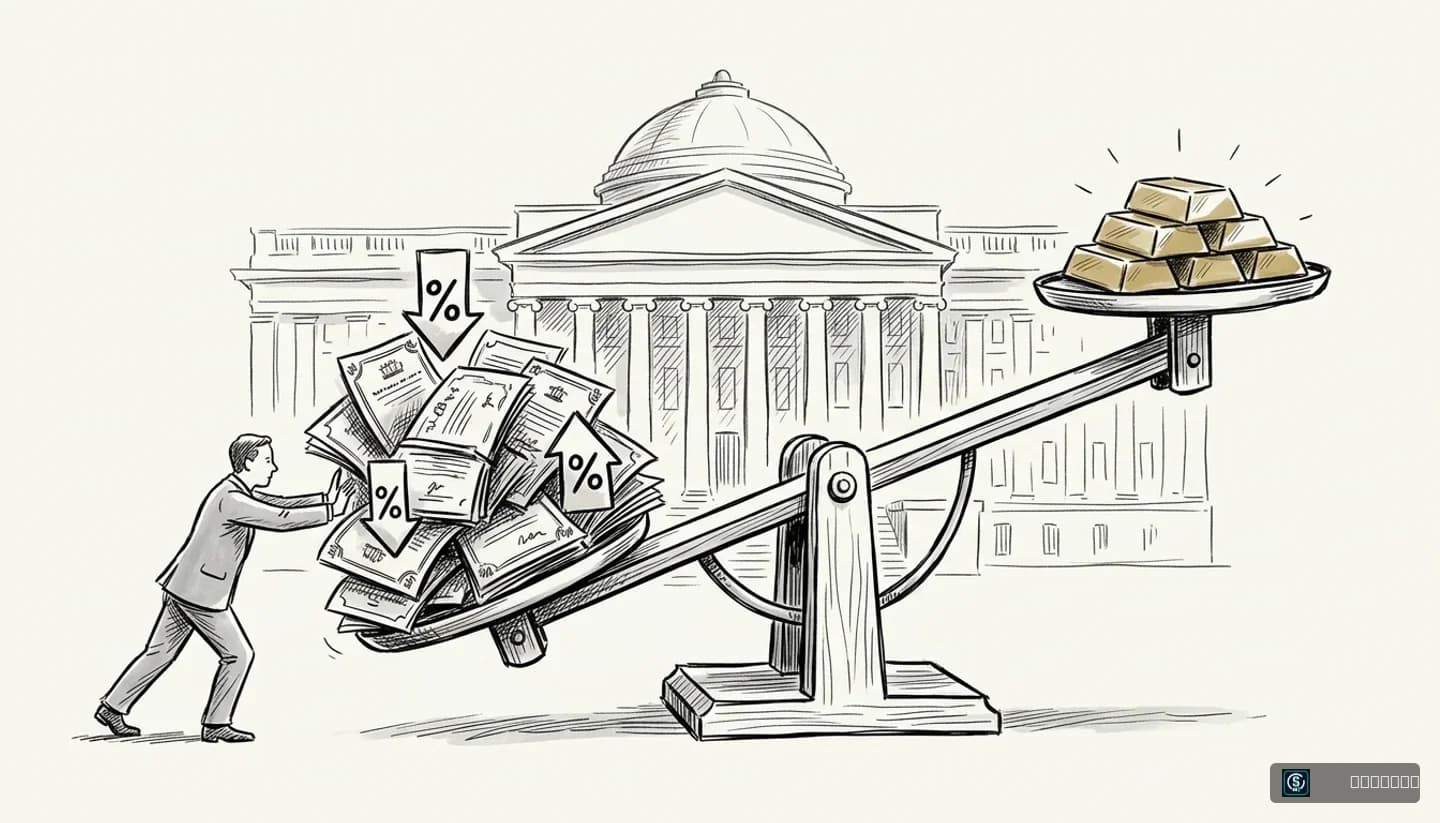
Bond prices and bond yields move in opposite directions. This inverse relationship is fundamental to understanding what happened on August 19. When demand for bonds increases (or when supply decreases), bond prices rise. As prices rise, yields fall. The announcement gave traders a reason to expect additional Treasury demand in those maturities, which pushed prices higher and yields lower.
If you own a 30-year Treasury bond paying 5.3% interest, and Treasury announces it will buy back billions of dollars of similar bonds, your bond becomes more valuable. Other investors know Treasury will be a buyer, so they're willing to pay more for bonds they can potentially sell to Treasury at a profit. That increased willingness to pay pushes prices up across the sector.
The yield on the 30-year Treasury bond fell as much as 0.1 percentage point following the announcement, an unusually sharp move so quickly. A 10-basis-point move in a single session is significant for the 30-year bond, which typically moves more slowly than shorter-dated securities.
The timing mattered because yields had been climbing relentlessly. The U.S. 30-year Treasury bond yield hit a new 19-year high as worries about the U.S. fiscal landscape and inflation persisted. This came as the U.S. fiscal deficit in July saw its highest monthly total since March 2021, while the annual inflation rate was still well above the Federal Reserve's 2% target as the Middle East conflict sent oil prices higher. That upward trajectory in yields stalled, at least temporarily.
Treasury Yield Changes Around the Buyback Announcement
Maturity Aug 18 (Before) Aug 19 (After) Aug 21 (End of Week) Change (bps) 10-Year 4.70% 4.647% 4.66% -4 bps 20-Year 5.21% 5.12% 5.15% -6 bps 30-Year 5.33% 5.196% 5.22% -11 bpsYields are end-of-session levels from the U.S. Treasury daily par yield curve. Columns compare August 18 (pre-announcement), August 19 (close) and August 21 (week's end). Historical performance does not guarantee future outcomes.
The yield drop was most pronounced in the 30-year sector, exactly where Treasury targeted the buyback. Shorter-dated bonds saw smaller moves because they weren't included in the expanded buyback program. An operation aimed at particular maturities moves that part of the curve and leaves the rest largely alone.
That was the mechanical effect on the day: more expected buying pressure, lower yields. Whether it lasted is a separate question, and the answer turned out to be no. That comes later.
Gold generates no income. It pays no dividends, no interest, no cash flow of any kind. When you own gold, your return comes entirely from price appreciation (or depreciation). This fundamental characteristic creates a direct relationship between gold and interest rates.
When Treasury yields are high, investors can earn substantial risk-free income by holding bonds instead of gold. A 30-year Treasury with a 5.3% coupon pays $53 per year for every $1,000 of face value, with the principal returned at maturity (assuming no default). Yield is a different measure: it reflects price, coupon and time to maturity, so a bond yielding 5.3% may carry a different coupon if it trades above or below par. Gold sitting in a vault pays nothing. The income investors give up by holding gold instead of bonds is called the opportunity cost.
As yields fall, that opportunity cost decreases. If the 30-year yield drops from 5.3% to 5.2%, the income investors sacrifice by holding gold instead of bonds falls from $53 to $52 per $1,000. That may seem small, but across billions of dollars of investment flows, it matters. Lower yields make gold relatively more attractive because the alternative (bonds) has become less rewarding.
Real yields matter even more than nominal yields for gold pricing. Real yield is the nominal yield minus expected inflation. If a bond yields 5% but inflation runs at 3%, the real yield is only 2%. Gold is often viewed as an inflation hedge, so when real yields are low or negative, gold becomes particularly attractive. High real yields work against gold, because bonds then deliver a positive return after inflation.
This relationship played out in real time on August 19. As Treasury yields fell following the buyback announcement, the opportunity cost of holding gold decreased. Investors who had been earning 5.3% risk-free on 30-year bonds suddenly faced a choice: continue holding bonds at 5.2%, or rotate some capital into gold, which might appreciate if yields fall further or if other factors (dollar weakness, geopolitical risk, fiscal concerns) come into play.
This doesn't mean gold automatically rises when yields fall. Many other factors influence gold prices: the dollar's strength, geopolitical tensions, central bank buying, jewelry demand, mining supply, and investor sentiment. But the link to yields is one of the most durable forces acting on gold. Lower yields reduce the cost of holding non-yielding assets, making gold more competitive with income-generating alternatives.
Historically, gold has done best when real yields are negative or very low, and it has struggled when yields are high and rising. Conditions in August 2026 were unusual on both counts: yields at 19-year highs meant a large opportunity cost for holding gold, and the sudden reversal repriced that cost in a single session. The pattern holds across decades, which is not a guarantee about the next one.
If the yields-to-gold chain is new to you, StockCram Foundations works through how a bond's yield is set and why that number moves the price of everything else.
Gold is priced in U.S. dollars globally. When you see a gold price of $4,500 per ounce, that's a dollar price. For investors holding euros, yen, or other currencies, gold's price depends on both the dollar price and the exchange rate between their currency and the dollar. This creates a mechanical relationship: when the dollar weakens, gold becomes cheaper for foreign buyers, which can increase demand and push prices higher.
The dollar weakened through the same mechanism that lowered yields. As yields fall, dollar-denominated assets become less attractive to foreign investors. A foreign central bank or pension fund choosing between U.S. Treasuries yielding 5.3% and other countries' bonds yielding similar amounts will prefer the higher-yielding option. When U.S. yields drop to 5.2%, some of that capital flows elsewhere, reducing demand for dollars and weakening the currency.
On August 19, the dollar index fell as yields dropped. The weaker dollar made gold cheaper for buyers using other currencies. That created additional buying interest from non-U.S. investors, amplifying the rally that began with the yield decline. The effect was not uniform, though: a European investor saw gold's euro price rise less than its dollar price, because the euro was strengthening at the same time.
Gold also serves as a hedge against dollar weakness. When investors worry about the dollar's long-term value (due to inflation, debt concerns, or loss of reserve currency status), they often buy gold as an alternative store of value. The buyback announcement, coming the same day that the U.S. national debt officially surpassed $40 trillion, with total public debt outstanding at roughly $40.05 trillion (U.S. Treasury, Debt to the Penny, August 18, 2026), reinforced concerns about the dollar's purchasing power over time.
Falling yields cut the opportunity cost of holding gold; the weaker dollar made it cheaper for foreign buyers and reinforced its role as a currency hedge. Those two forces arriving together are why the move was so sharp and so concentrated in one session.
Our explanation of the weak dollar goes further into how currency moves feed through to asset prices.
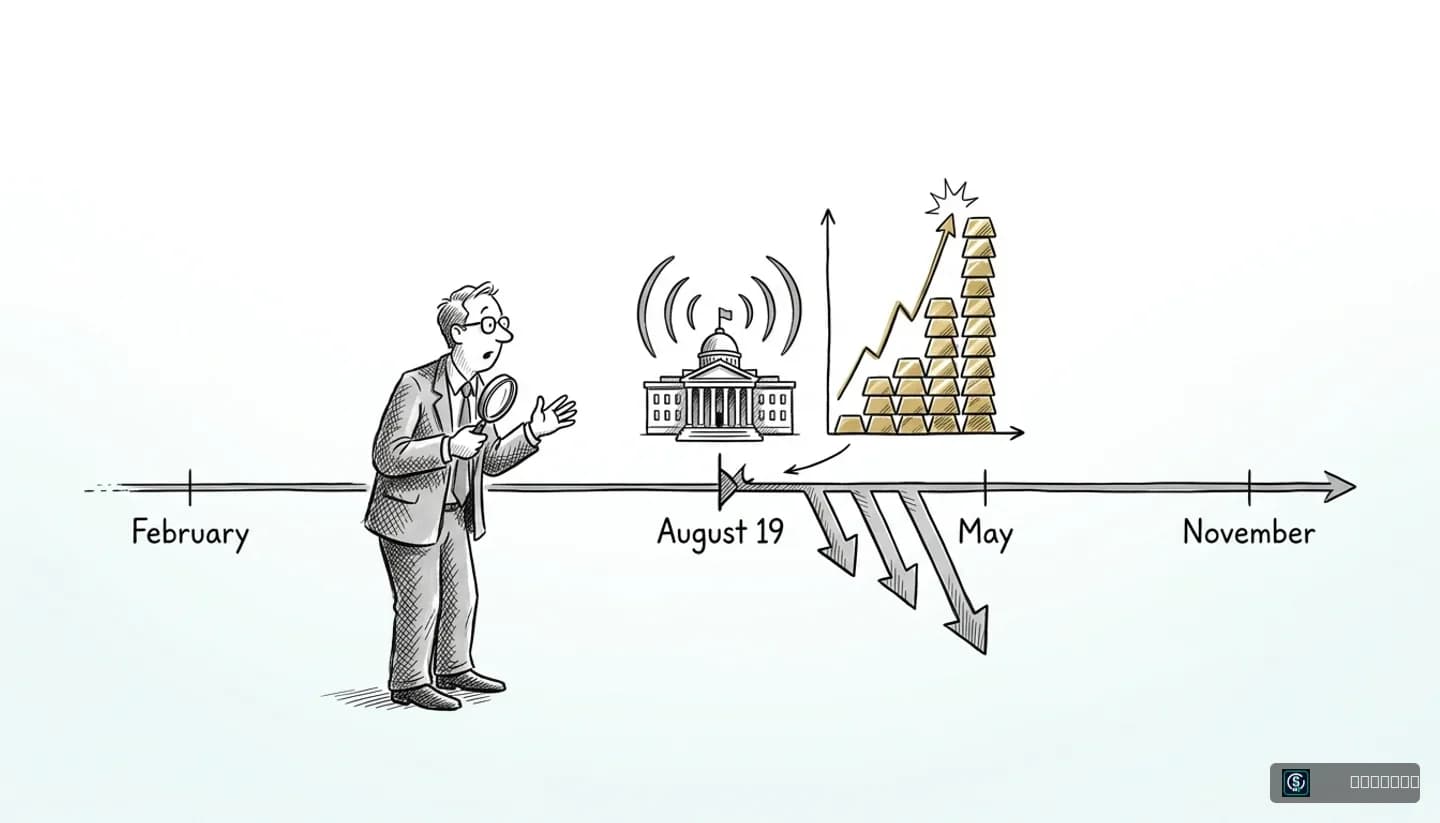
Treasury normally announces changes to its buyback program at quarterly refunding statements, which occur in February, May, August, and November. These statements are scheduled well in advance, and Treasury telegraphs major changes to avoid surprising markets. The preference for predictability reflects a core principle of debt management: stable, transparent policies reduce borrowing costs by giving investors confidence in how Treasury operates.
That pattern broke on August 19, when Treasury announced that it would at least double the amount of longer-dated Treasury bonds that it would buy back from investors, from $2 billion to $4 billion per operation, between September 9 and November 4. The announcement came just two weeks after the regular August 5 refunding statement, which had already laid out the buyback schedule for the quarter.
The decision to announce a major change mid-quarter, outside the normal schedule, led some market participants to infer that conditions in the long end had deteriorated enough to warrant an earlier adjustment.
What changed? The 30-year yield had climbed to 19-year highs, and a $16 billion 20-year bond auction was approaching. Market participants described conditions in the long end of the Treasury market as a "buyers' strike," with investors demanding higher yields to absorb the steady flow of new issuance. Under the accelerated buyback, Treasury, led by Secretary Scott Bessent, would target the 10- to 20-year and 20- to 30-year portion of the market, where demand had been weakest since late June.
When Treasury breaks its own preference for predictability, that choice carries information: the situation was serious enough to justify unsettling markets. Some analysts interpreted the move as a sign of panic or desperation. Others saw it as prudent crisis management. Either way, acting mid-quarter rather than waiting three months for the November refunding statement was itself read as a signal about conditions in the long end.
It came on the morning of August 19 and drove borrowing costs down immediately. The timing showed how central lower interest rates have become to the administration's definition of a strong economy.
The timing also raised questions about Treasury's ability to manage the debt load going forward. If conditions warranted changing the buyback plans outside the normal quarterly cycle, a further rise in yields would raise the same question more sharply. Set against roughly $30 trillion of marketable Treasury debt (the tradable portion of the $40.05 trillion total), the program is tiny. Doubling it from $2 billion to $4 billion provides some liquidity support, but it doesn't address the fundamental supply-demand imbalance: the U.S. government is issuing more debt than traditional buyers (foreign central banks, domestic institutions) want to absorb at yields below 5%.
It was also a reminder that government policy can change quickly when market conditions deteriorate. The predictability that Treasury normally provides is valuable precisely because it reduces uncertainty. When that predictability breaks down, it can signal deeper problems that policy tools may struggle to address.
The variable analysts watch here is the term premium: the extra yield demanded for holding longer-dated debt. It rises when investors want more compensation for holding duration.

The bond market's reaction did not hold. On Thursday August 20, long-dated yields reversed the previous day's decline: the 30-year climbed roughly 7 basis points to about 5.26%, close to where it had been before the announcement, and the 10-year moved back to around 4.71% (CNBC, August 20, 2026). By Friday the rally had, in CNBC's phrasing, fizzled out. Investors appeared unconvinced that a $4 billion operation would durably change borrowing costs against the scale of Treasury's issuance.
Gold did not follow the yields back. It kept climbing through the following week, reaching a three-month high around August 25 and trading near $4,647 an ounce in late August, up more than 15% for the month (CNBC, August 25, 2026; Reuters market data). UOB described it as gold's strongest monthly gain since September 1999. Historical performance does not guarantee future outcomes.
That divergence is worth sitting with, because it complicates the tidy story. If gold had risen only because yields fell, it should have given the gain back when yields recovered the next day. It did not. The yield mechanism explains the initial 4% move on August 19; it does not explain the fortnight that followed. Analysts have generally attributed the continuation to the weaker dollar and to fiscal-credibility concerns, which the next section takes up, rather than to the buyback itself.
The World Gold Council, reviewing the same episode, was explicit that the expansion is not yield curve control, while noting that some commentators read it as a step in that direction (World Gold Council, August 2026). That is the honest summary: a liquidity operation that markets briefly priced as something larger, then largely repriced back.
The term "debasement trade" refers to buying gold as protection against currency weakness caused by excessive government debt, money printing, or fiscal mismanagement. The concept has historical roots: when governments debased their currencies (literally reducing the precious metal content of coins, or in modern times, printing money to finance deficits), gold served as an alternative store of value that governments couldn't debase.
The buyback announcement revived debasement-trade concerns for several reasons. First, the timing: Total U.S. public debt surpassed $40 trillion for the first time, and had surged by a third in less than five years. Public debt outstanding stood, per Treasury's Debt to the Penny series, at $40.05 trillion as of the close on August 18. It landed the same day this milestone was reported, creating an uncomfortable juxtaposition. Treasury described the change as liquidity support. One market reading was that officials were responding to stress in the long end, at the exact moment total debt crossed $40 trillion.
It is worth saying plainly what this is not: buybacks are not debt monetization. Treasury is not creating money the way the Federal Reserve does when it expands its balance sheet. Critics sometimes place both inside the broader debasement narrative because each involves official-sector demand for government debt, but the mechanics differ. In a buyback, Treasury uses cash to retire debt early. Where does that cash come from? From issuing new debt or from tax revenues. If Treasury buys back $4 billion of 30-year bonds while issuing $50 billion of new bonds across all maturities to finance the deficit, the net effect is to shift the maturity profile toward shorter durations.
The mid-quarter timing also mattered. Some read it as a signal about fiscal conditions. In a healthy fiscal environment, Treasury would have less reason to step into the long end at all. The market would absorb new issuance at reasonable rates because investors would have confidence in the government's ability to service its debts. Some debasement-trade investors read the mid-quarter expansion as another sign that policymakers were becoming more sensitive to stress in the long end.
The U.S. was paying about $1.1 trillion annually to service its debt, slightly more than it spends on defense (U.S. Treasury, Monthly Treasury Statement, fiscal 2026 to date). In the first 10 months of the 2026 budget year, interest costs had eclipsed health insurance spending and were now the second-largest slice of spending after pensions. When interest costs consume an ever-larger share of the budget, the government faces difficult choices: raise taxes, cut spending, or issue more debt to pay interest on existing debt. The latter option creates a spiral that can undermine confidence in the currency.
Gold's role in this environment is as an alternative to government-issued currency and debt. Unlike dollars or Treasury bonds, gold is no one's liability. It can't be printed, debased, or defaulted on. When investors worry about the long-term sustainability of government finances, gold becomes more attractive as a store of value that sits outside the government debt system.
The debasement trade doesn't require actual currency debasement or default. It's driven by concerns about future debasement or loss of purchasing power. This episode shows how a policy action (the buyback) and a fiscal milestone (the $40 trillion debt level) can combine to revive these concerns, even without an immediate crisis. That is why gold can rally on news with no obvious connection to metals. The link runs through fiscal credibility and currency confidence.

Reduced foreign demand for U.S. Treasuries is much of why yields had reached 19-year highs in the first place. That context matters for reading the announcement, and for understanding why its effect on yields did not last.
Foreign central banks, particularly China and Japan, have historically been major buyers of U.S. Treasuries, accumulating them as a byproduct of currency management and as a store for reserves. Some of those buyers have become more price-sensitive. Japan's 10-year yield hit a 30-year high in August 2026, making Japanese government bonds more competitive with Treasuries, which gives Japanese investors less reason to buy abroad (U.S. Treasury, TIC data).
The result is that investors are demanding more compensation for duration and fiscal uncertainty. Washington continues to issue bonds to finance deficits exceeding $2 trillion per year, but the traditional buyers (foreign central banks, domestic banks, pension funds) are less willing to absorb that supply at yields below 5%. This mismatch between supply and demand pushed yields higher throughout July and early August 2026, culminating in the 19-year high on August 18.
Some analysts read the expanded buybacks against that backdrop of thinner foreign demand. By stepping in as a buyer of $4 billion per operation in the 10-to-30 year sector, Treasury provided temporary support to a market segment that had lost a major source of demand. But the buyback is small relative to the overall supply of new issuance. Hundreds of billions of dollars of new debt are issued each quarter. A $4 billion buyback operation, even if conducted multiple times per month, can't offset the fundamental imbalance.
The shift in foreign demand matters because it points to a structural change in the Treasury market. That doesn't mean Treasury will default or that yields will spiral out of control, but it does mean the U.S. government may face persistently higher borrowing costs than it did in the 2010s. Those higher costs have implications for fiscal policy, economic growth, and asset allocation across stocks, bonds, and alternatives like gold.
Several lessons follow from the August 19 episode, without crossing into recommendations or predictions. It is a clean illustration of how gold responds to changes in yields, the dollar and fiscal credibility.
Gold has a different correlation profile. Gold often moves independently of stocks and bonds, which is why analysts study its correlation with portfolio volatility. When stocks and bonds both fall (as they did in 2022 during the Fed's rate-hiking cycle), gold can provide ballast. When yields fall and the dollar weakens (as on August 19, 2026), gold can rally even if stocks are flat. Gold's historically different correlation profile is one reason investors study it as a diversification asset.
Gold has an opportunity cost. Gold generates no income, which means it underperforms when real interest rates are high and rising. Rising real yields let government bonds deliver meaningful inflation-adjusted income, while gold generates none. The flip side showed up here: when yields fall, gold can make up lost ground quickly. But the lack of yield is a real cost that investors must weigh against gold's diversification benefits.
A one-day move does not explain a trend. Gold rose 4% in a single day on August 19, but it can fall just as quickly when conditions reverse. Gold is not a stable, low-risk asset. Its price can swing dramatically based on yields, the dollar, geopolitical events, and sentiment. Gold has historically been volatile, and that volatility is part of what any holder is exposed to. Some investors hold gold as a small portion of a diversified portfolio; others hold more, or none at all. Position size depends on objectives, time horizon, taxes, liquidity needs and risk tolerance. StockCram does not recommend an allocation.
The practical question of how to hold gold, whether physical metal, an ETF, mining shares or futures, is a separate subject with its own tradeoffs in storage, fees, liquidity, counterparty risk and tax treatment. We cover that in its own guide rather than compress it here.
These questions address the most common points of confusion about the August 19, 2026 gold rally and the Treasury buyback announcement.
Related reading: why a weaker dollar moves asset prices, and what makes an asset a safe haven.
Gold rose roughly 4% on August 19, 2026, the day Treasury announced it would at least double long-end buybacks from $2 billion to $4 billion per operation.
The change took effect on September 9, so no enlarged operation happened that day; traders repriced on the announcement.
30-year Treasury yields fell sharply after the announcement, reducing gold's opportunity cost and coinciding with a weaker dollar.
Yields had reached a 19-year high the day before. Historical levels do not indicate future results.
The unusual mid-quarter timing was interpreted by some investors as evidence of stress in the long end, while Treasury itself described the expansion as liquidity support.
Treasury cited consistent strong sponsorship in longer-dated buyback operations, not distress.
Yields reversed the next day, but gold kept rising through late August.
That divergence suggests the dollar and fiscal-credibility concerns, not the yield move alone, drove the continuation.
The variables analysts watch are real yields, Federal Reserve policy, the dollar, central bank demand and positioning.
None of them forecasts a price. They describe what moves one.
Is the housing market crashing in 2026? The truer answer: it's frozen, not crashing. The lock-in effect, both sides, in plain English.
You've heard "high rates are bad for stocks," yet stocks are near record highs. Here's the plain-English why, both sides, anchored to the 2026 market.
At Kevin Warsh's first meeting, the Fed held rates in June 2026, but flipped its signal toward a hike. A plain-English decode of what happened and why it matters.
Gold rose as long-term Treasury yields fell and the dollar weakened after the announcement. Lower yields reduce the opportunity cost of holding non-yielding gold, while a weaker dollar can make gold cheaper for overseas buyers. Some investors also read the unusual mid-quarter expansion as a sign of stress in the long-term Treasury market.
A Treasury bond buyback is when the U.S. government repurchases its own previously issued bonds from the market before they mature. Treasury pays cash to bondholders in exchange for retiring the debt early. This program targeted 10-to-30 year bonds and doubled the maximum purchase size from $2 billion to $4 billion per operation to improve market liquidity. The goal is to provide support in specific parts of the bond market where trading has become difficult or yields have risen uncomfortably high. This is different from Federal Reserve bond purchases (quantitative easing), which involve the central bank creating new money rather than Treasury using existing cash.
Treasury yields represent the opportunity cost of holding gold. Since gold pays no interest, when yields are high (5%+), investors can earn risk-free income from bonds instead. When yields fall, the income investors give up by holding gold decreases, making gold more attractive. Real yields (nominal yield minus inflation) matter most for gold pricing. When real yields are negative or very low, gold tends to perform well because investors can't earn positive inflation-adjusted returns from bonds. When real yields are high, gold faces headwinds because bonds offer attractive real returns without price volatility.
No. In quantitative easing the Federal Reserve creates new reserves to buy bonds, expanding its balance sheet. In a buyback, Treasury uses cash it already has to retire debt early, changing which securities are outstanding rather than the quantity of money. Both involve official-sector demand for government debt, which is why they are sometimes discussed together, but the mechanics differ.
No one can predict gold's future price. Gold's direction depends on multiple factors: whether Treasury yields stay low or reverse higher, Federal Reserve policy decisions, the dollar's strength, geopolitical developments, and investor sentiment about fiscal sustainability. That program runs through November 4, 2026, but conditions can change. Rising yields (from inflation, Fed policy, or foreign selling) have historically weighed on gold. If yields continue to fall or if fiscal concerns intensify, gold could rally further. Historical performance does not guarantee future outcomes. It shows how gold responds to specific events.
The debasement trade refers to buying gold as protection against currency weakness caused by excessive government debt or money printing. When governments step into bond markets (as with the August 2026 buyback), some investors interpret this as a sign of fiscal stress or debt monetization, similar to quantitative easing. Gold's role as an alternative store of value becomes more attractive when confidence in government debt management weakens. The term has historical roots: when governments literally debased their currencies by reducing precious metal content in coins, gold served as a hedge. In modern times, the debasement trade is driven by concerns about future currency weakness or loss of purchasing power, even in the absence of immediate crisis.