

Two Ways to Own Bonds
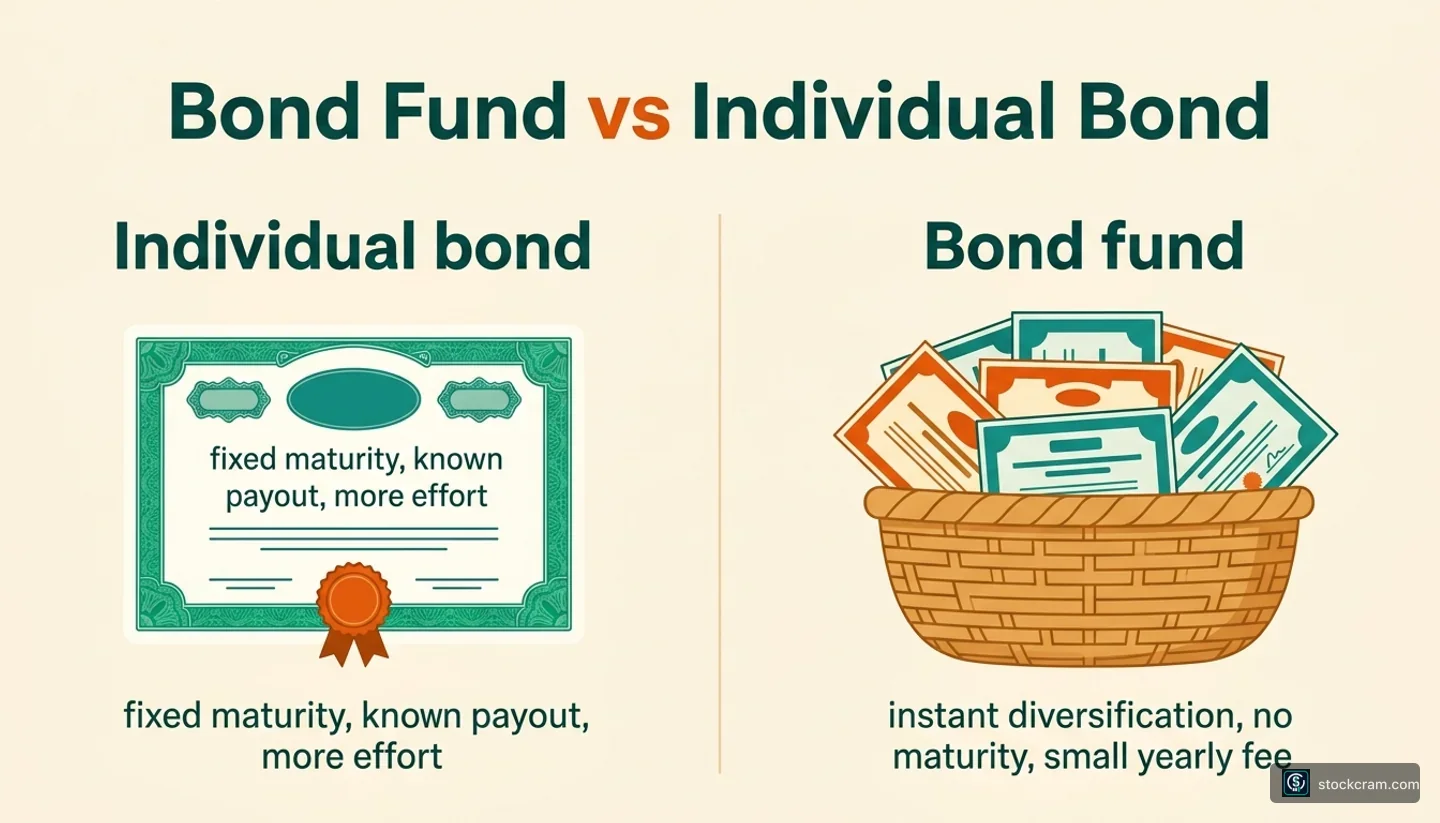
Once you understand what a bond is, there's a practical question: how do you actually own them? There are two routes. You can buy individual bonds one at a time, picking each one yourself. Or you can buy a bond fund — often a bond ETF — a single product that holds hundreds or thousands of bonds in one basket. You buy one share and you own a slice of the whole pile. Here are the two routes side by side:
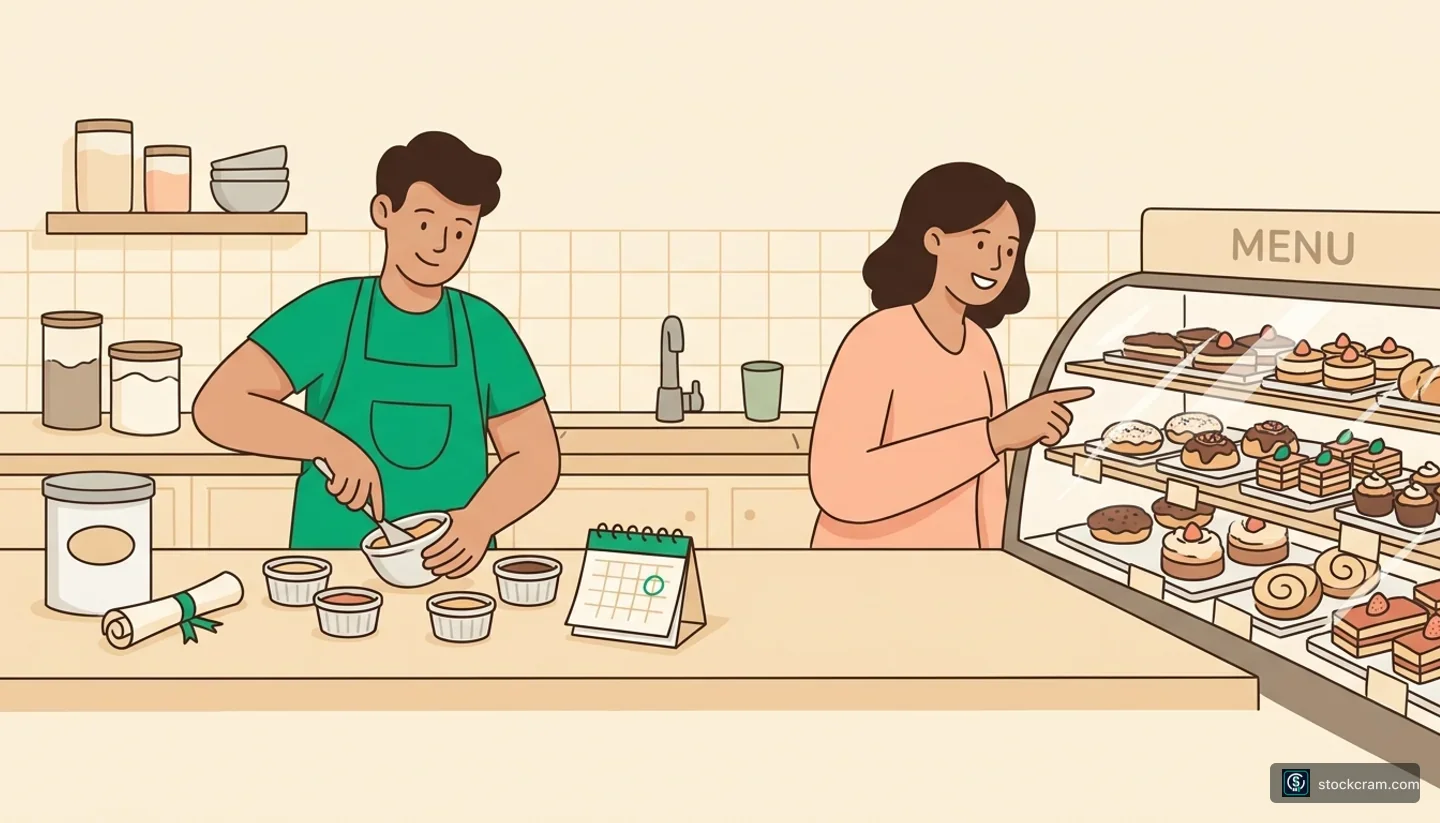
The easiest way to feel that difference is in the kitchen.
The Kitchen Analogy
An individual bond is like cooking one dish yourself: full control over the recipe, but real work to make a whole varied meal.
A bond fund is like a buffet or a subscription box: instant variety and convenience, in exchange for a small fee for someone else doing the gathering.
Owning Individual Bonds
When you buy a single bond, you get the deal we covered earlier: a known interest payment and a fixed maturity date. Hold it to the end and — barring the borrower running into trouble — you know exactly how much you'll get back and when. That certainty is the headline appeal of owning bonds directly.
Follow One Bond
You buy a single bond with a $1,000 face value, a 4% coupon, and a 5-year maturity.
You collect $40 a year for five years, then your $1,000 comes back on the maturity date. You knew that number the day you bought it. To get that same certainty across, say, 20 different bonds, you'd need 20 times the money and 20 separate decisions.
That last point is the catch. Spreading your money across many borrowers — the heart of diversification — gets expensive and fiddly when each bond can cost $1,000 or more. Building a varied set of individual bonds takes real money and real effort.
Owning a Bond Fund
A bond fund solves the effort problem in one move. With a single purchase you own a tiny piece of every bond inside it — government, corporate, short-term, long-term, all at once. That's instant diversification, and a fund share trades as easily as a stock, so buying and selling is quick.
The Trade-Off in One Idea
A bond fund never matures. Bonds inside it are constantly bought, paying out, and replaced, so there's no single maturity date and no promise of a specific amount back on a specific day. The fund's price floats up and down with interest rates instead.
This is the real difference. With an individual bond, if you hold to maturity, day-to-day price swings don't change your final payout. A fund has no 'final day' — its value simply rises and falls with the bond market. When rates climb, the fund's price tends to dip; when rates fall, it tends to rise. Plenty of investors are happy to live with that float for the convenience. Others would rather have the fixed end date of a single bond.
The Small Fee: Expense Ratios
Convenience isn't free. A bond fund charges an expense ratio — a small yearly fee for running the basket, shown as a percentage. A 0.10% expense ratio means about $1 a year for every $1,000 you have in the fund. It's quietly subtracted, so you never write a check, but it does nibble at your return over time.
$1 / year
Roughly what a 0.10% expense ratio costs on a $1,000 bond-fund holding
An individual bond has no expense ratio — you own it outright. The fee is the price of the convenience and diversification a fund bundles together. Whether that trade is worth it depends on how much you value the effort it saves you.
Side by Side
| Feature | Individual bond | Bond fund |
|---|---|---|
| Maturity date | Yes — fixed, with a known payout if held to the end | No single maturity; price floats with rates |
| Diversification | You build it yourself, one bond at a time | Instant — hundreds of bonds in one purchase |
| Effort | More — research and pick each bond | Less — one purchase covers the basket |
| Cost | No expense ratio; you own it outright | A small yearly expense ratio |
Individual bonds vs bond funds at a glance. Neither is simply better — they trade certainty against convenience.
Educational use only
Educational content only. StockCram isn't a broker or adviser, and we have no affiliation with any institution we name.