

What Is a Bond?
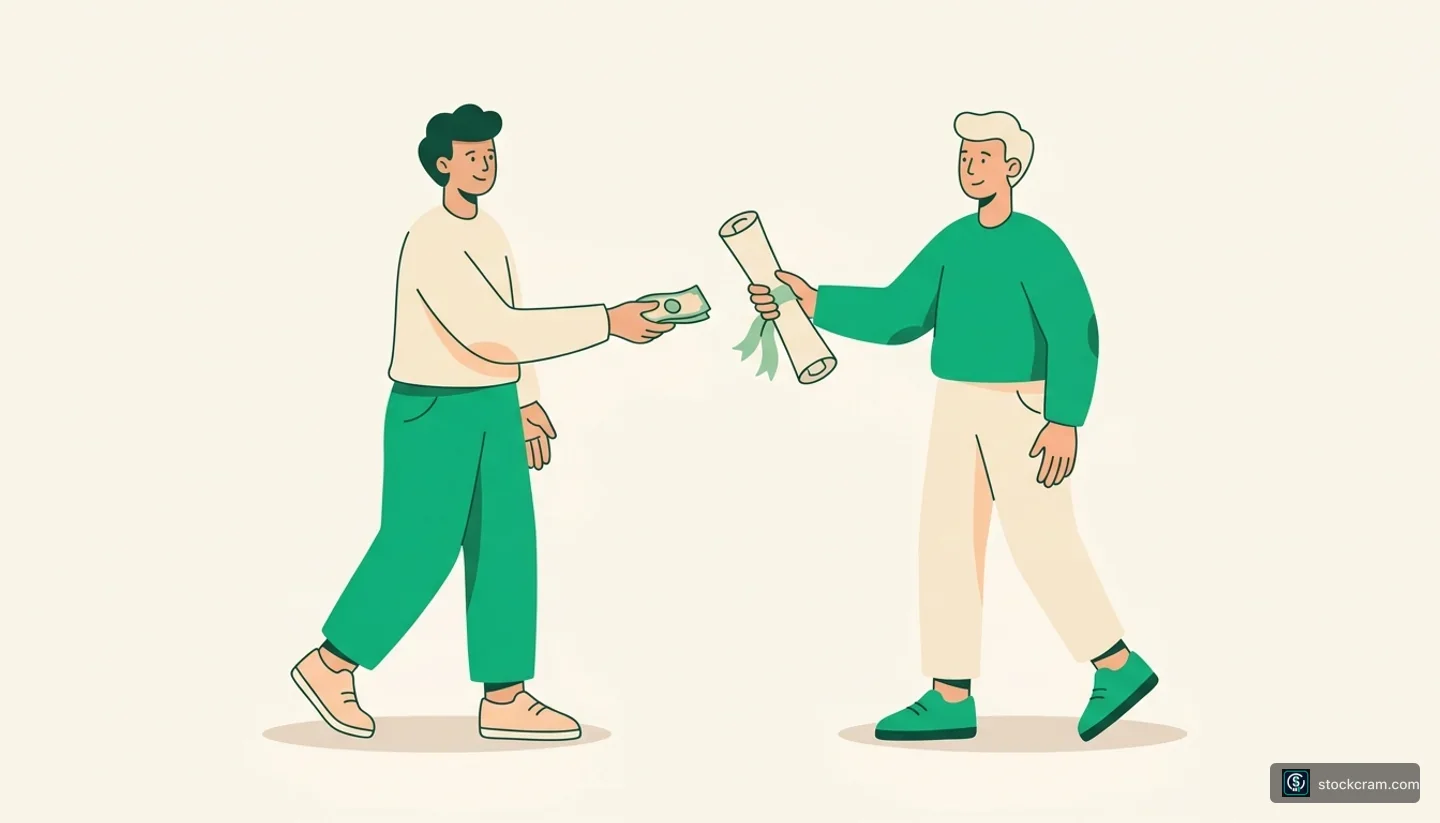
Imagine a friend asks to borrow $20 and promises to pay you back next month — plus a dollar for the favor. You just made a tiny bond. A bond is exactly that, scaled up: you lend money to a government or a company, they pay you interest for the use of it, and they give your money back on an agreed date. Here's the whole idea in one picture:
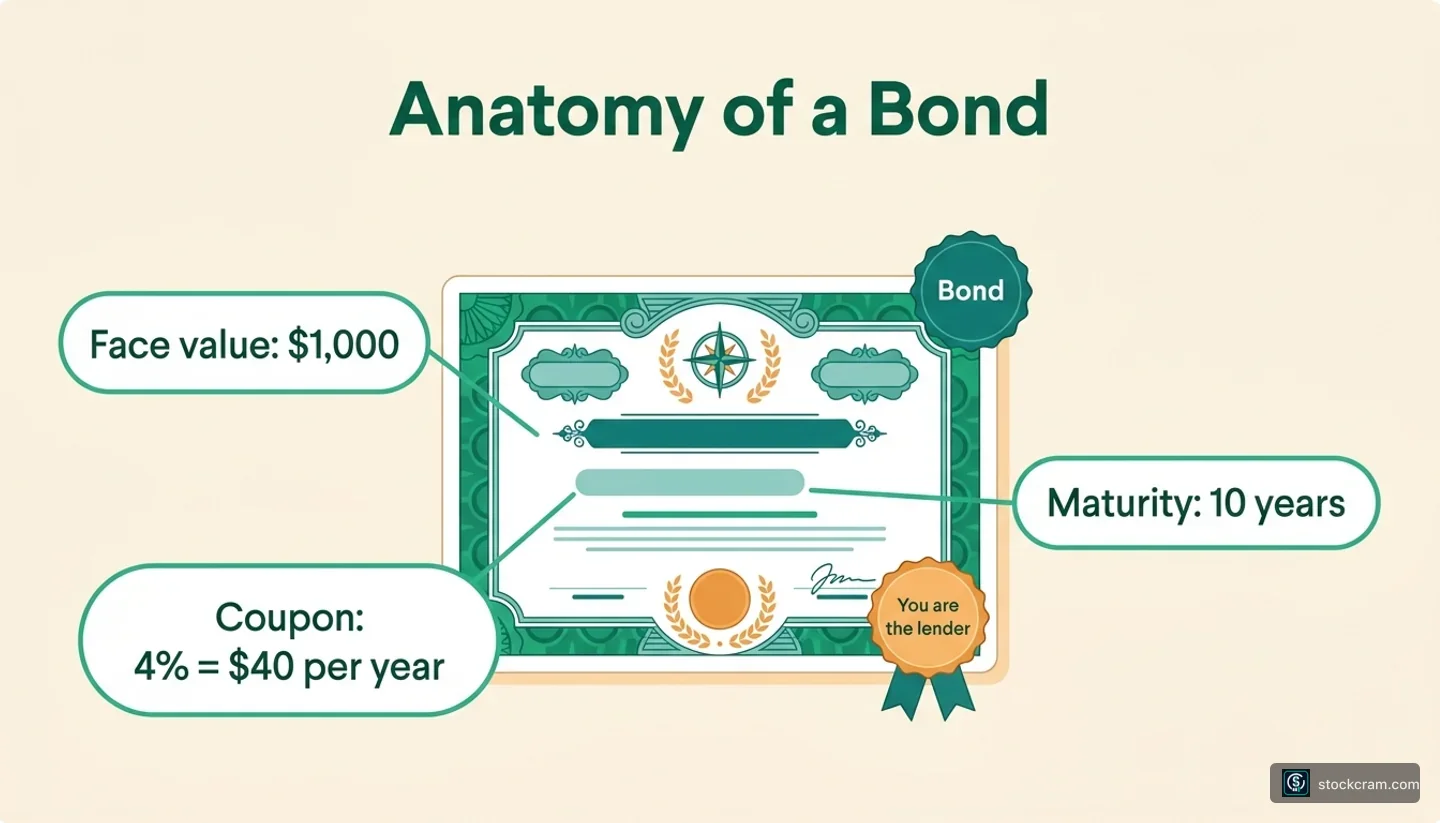
Lender, not owner. That distinction matters more than anything else here, so let's say it plainly.
The One-Sentence Version
A stock makes you an owner of a company. A bond makes you a lender to one. Owners share in the profits and the risk; lenders just want their interest and their money back.
That's why bonds are called fixed income: the payments are usually set in advance, so you know what you're getting and when. It's a calmer, more predictable deal than owning stock. In exchange, you typically give up the big upside a stock can offer.
The Three Numbers on Every Bond
Every bond, whoever issues it, comes down to three numbers. Learn these and you can read any bond.
Face Value
- The amount you get back at the end
- Also called 'par' — often $1,000
- Think of it as the size of the loan
Coupon
- The interest rate the bond pays
- A 4% coupon on $1,000 = $40 a year
- Usually paid in two installments a year
Maturity
- The date you get your money back
- Could be months or 30 years away
- Longer maturity usually means more risk
Follow One Bond
You buy a bond with a $1,000 face value, a 4% coupon, and a 10-year maturity.
Every year, you collect $40 in interest (usually $20 twice a year). You do that for ten years — about $400 total. Then, at maturity, you get your $1,000 back. Simple, predictable, and known from day one.
Who Issues Bonds — and Why
Borrowers issue bonds when they need money but don't want to give up ownership. Instead of selling shares, they borrow from thousands of investors at once and promise to pay it all back with interest.
Governments
- The U.S. issues Treasury bonds to fund spending
- Seen as the safest borrowers of all
- Cities and states issue them too
Companies
- Corporate bonds fund factories, growth, deals
- Pay more interest than Treasuries
- Because there's more risk they can't repay
The Trade-Off in One Idea
The safer the borrower, the less interest they need to offer. A rock-solid government pays less. A shakier company pays more to make the loan worth your risk. That one trade-off, safety versus payout, runs through the entire bond market.
Stocks vs. Bonds, in One Line
If you're weighing the two, the short version is: stocks are for growth and bonds are for stability and income. Most long-term investors hold some of each. We cover the full comparison in Stocks vs Bonds — this course is about going deep on the bond side.
Why Bonds Matter to You
Even if you never buy a single bond directly, they shape your financial life. Bonds set the backdrop for interest rates, steer mortgage costs, and act as the steadier ballast in many retirement portfolios. Learn how they work and you've got a handle on the foundation the whole market sits on.
| Feature | What it means |
|---|---|
| What you are | A lender, not an owner |
| What you earn | Regular interest (the coupon), then your principal back |
| Main appeal | Predictable income and lower swings than stocks |
| Main trade-off | Less growth potential than owning stocks |
A bond at a glance.
Educational use only
Educational content only. StockCram isn't a broker or adviser, and we have no affiliation with any institution we name.