

Bond Yields Aren't Just for Traders
A bond yield can sound like something that only matters on a trading floor. It isn't. The yield on bonds sets the backdrop for the loans in your life — the rate on a home, a car, even what your savings account pays. When the bond market moves, those numbers tend to move with it, often without anyone announcing it.
The One-Sentence Version
Bond yields are the price of borrowing money in the wider economy. When that price changes in the bond market, the cost of your loans usually drifts in the same direction.
The 10-Year Treasury Is the Tide
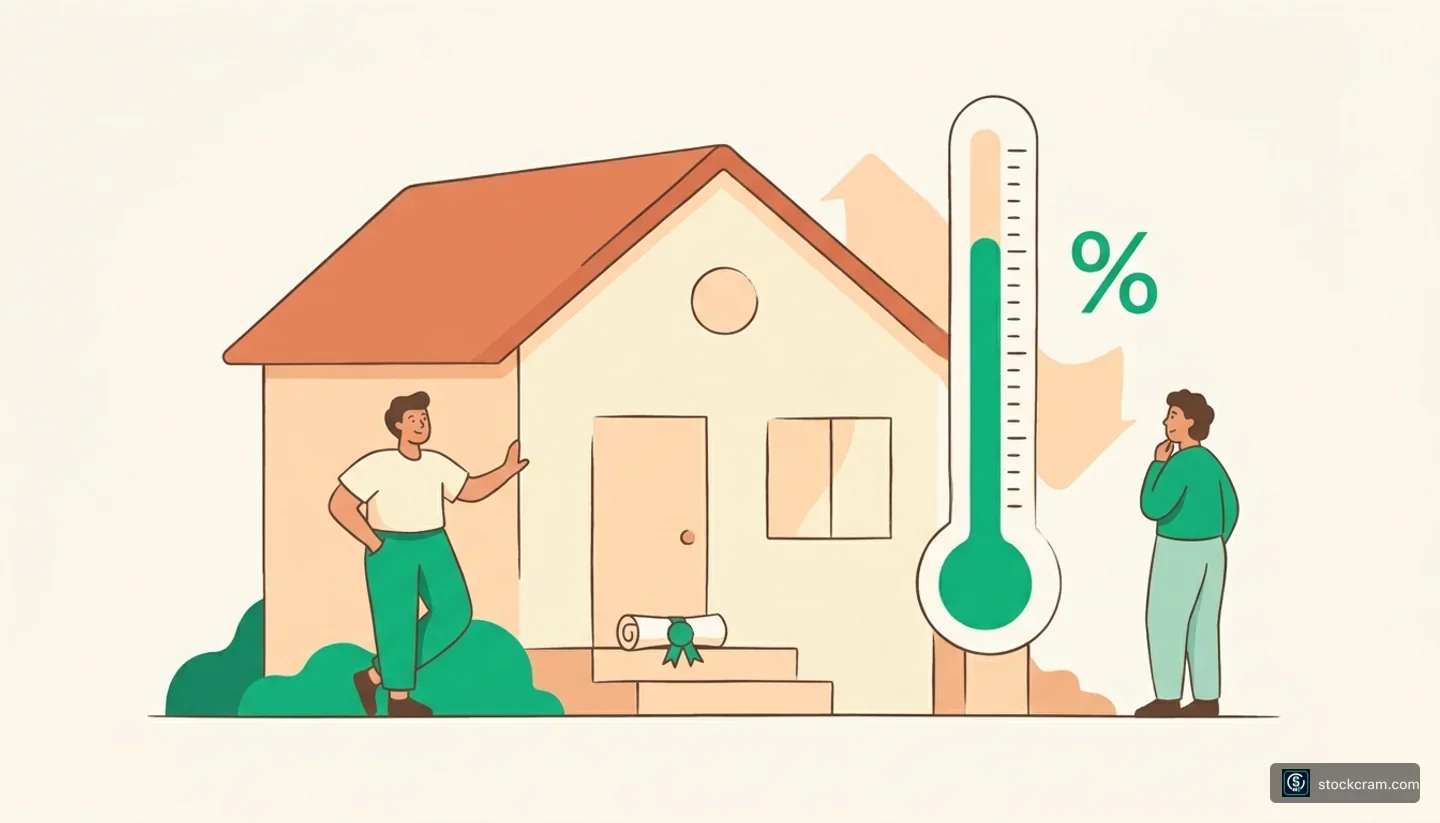
Think of the 10-year Treasury yield as the tide in a harbor. Every boat — mortgages, car loans, business loans — floats on that water. When the tide comes in, all the boats rise together; when it goes out, they drop. The mortgage boat doesn't sit exactly at the waterline, but it follows the tide up and down.
The 10-year is the main reference point that 30-year mortgage rates tend to track. Mortgage rates usually sit a bit above the 10-year yield — that gap covers the extra risk and cost of lending on a home for decades. This link is a general tendency, not an exact formula, and the gap can widen or narrow over time. Picture the yield as a tide:
Which raises a fair question: why the 10-year specifically, rather than a bond that matches the full length of a mortgage?
Why the 10-Year, Not a 30-Year Bond?
A 30-year mortgage sounds like it should track a 30-year bond. But most people sell or refinance their home long before 30 years, so the loan behaves more like a 10-year commitment. That's why lenders watch the 10-year Treasury as their reference point.
When Yields Rise, Payments Climb
Because mortgage rates ride on top of the 10-year yield, the pattern is simple: when Treasury yields rise, mortgage rates usually rise too. A higher rate on the same loan means a higher monthly payment. The size of the house doesn't change — the cost of borrowing for it does.
Follow One Mortgage (Illustrative)
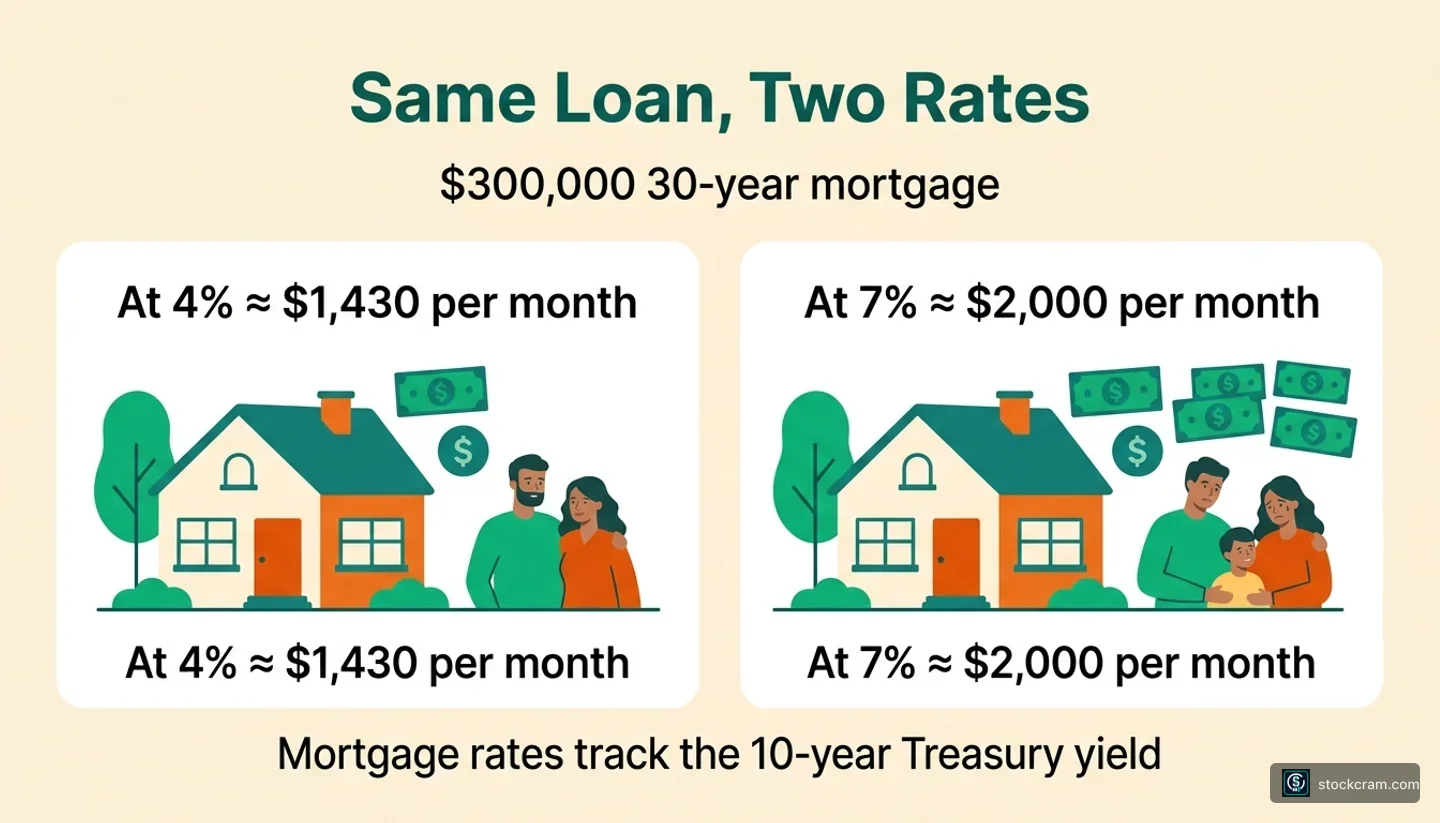
Picture a $300,000 30-year mortgage. At roughly 4%, the monthly payment is about $1,430. At roughly 7%, that same loan costs about $2,000 a month.
Same house, same loan size — but the higher rate adds around $570 a month. These are stylized, rounded figures for illustration only, not a quote or a prediction.
That's why bond yields show up in the news when home buyers are paying attention. A move in the yield of a few tenths of a percent can change a monthly payment by a meaningful amount over the life of a loan.
It's Not Just Mortgages
The same gravity that pulls mortgage rates also reaches the rest of everyday borrowing and saving. Yields are the reference point that lenders and banks build their own numbers on top of.
What You Borrow
- Car loans tend to move with broader rates
- Business and personal loans cost more when yields rise
- Companies pay more to issue their own bonds
What You Earn
- Savings-account and CD rates often follow yields up
- Money-market funds reflect short-term rates
- Higher yields can mean more interest on your cash
The Two-Sided Coin
Rising yields aren't simply 'good' or 'bad.' Higher yields make borrowing more expensive, but they can also mean more interest earned on savings. Which side matters most depends on whether you're the borrower or the saver in a given moment.
The Through-Line
The bond market quietly prices a huge part of everyday life. The Federal Reserve influences short-term rates through the federal funds rate, but the longer-term yields set in the bond market are what mortgages and many other loans actually follow. Get a feel for yields and you can see the machinery behind the rate on your home, your car, and your savings.
| If the 10-year yield... | Mortgage rates tend to... |
|---|---|
| Rises | Rise too, so monthly payments climb |
| Falls | Fall too, so monthly payments ease |
| Stays flat | Hold roughly steady |
| Moves sharply | Often move in the same direction, with a lag |
A general tendency, not an exact formula. Illustrative only.
Educational use only
Educational content only. StockCram isn't a broker or adviser, and we have no affiliation with any institution we name.