Order Types & ExecutionLesson 7

How Your Order Gets Filled

Where your order really goes after you tap Buy — routing, market makers, and payment for order flow.

6 min read
Intermediate
Sean ShaReviewed by Sean Sha
Updated: May 2026
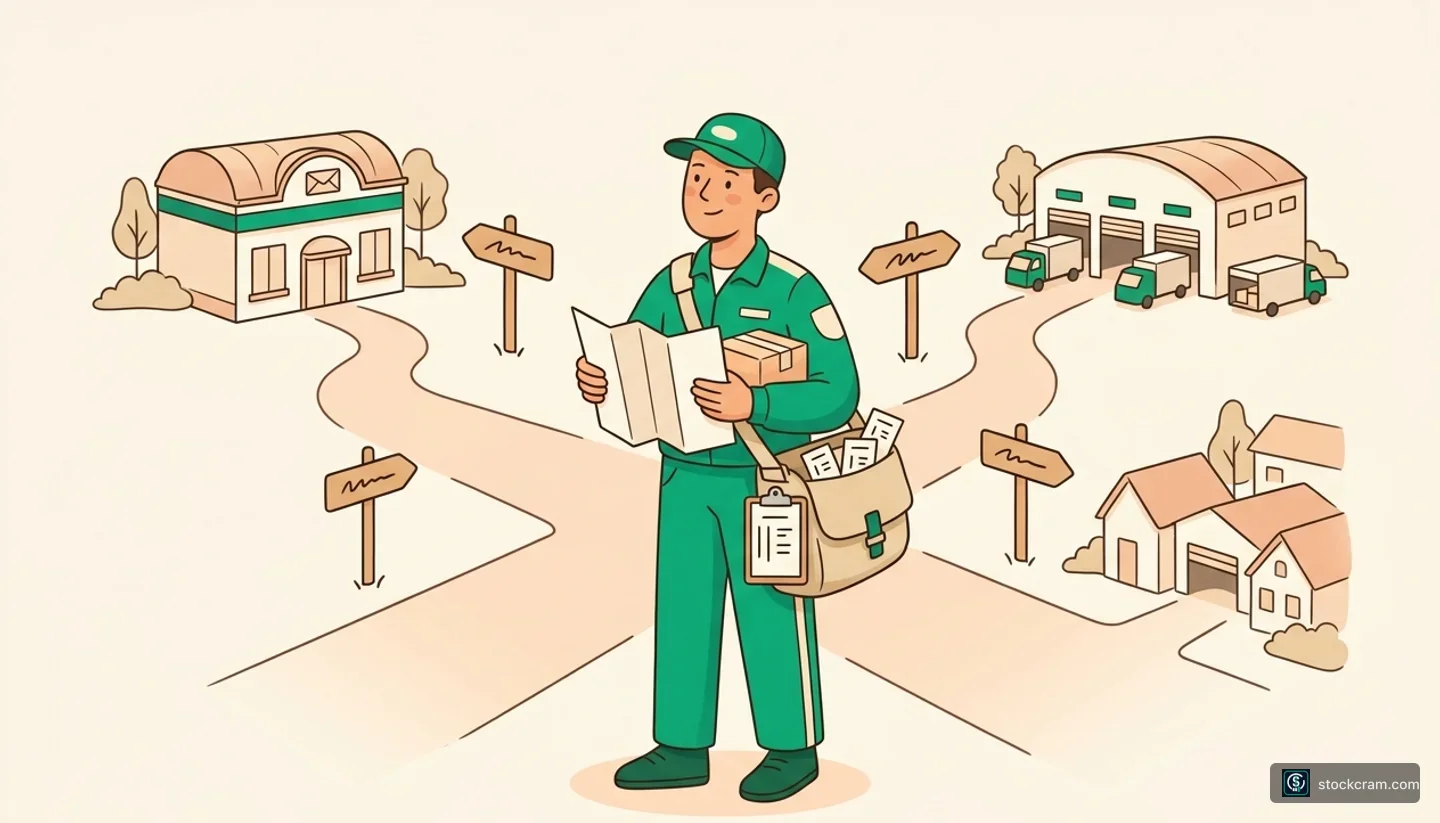
Illustration: A friendly mail carrier at a neighborhood crossroads consulting a route map to decide which of three delivery paths to take for a package

Educational purposes only. This content does not constitute investment advice. Read our disclaimer

StockCram is not a broker-dealer, investment adviser, or financial institution. All content is for educational and informational purposes only and should not be construed as personalized investment advice. Consult a qualified financial professional before making investment decisions. Past performance does not guarantee future results.

TL;DR

After you submit an order, your broker decides where to send it — an exchange, a wholesaler (market maker), or a dark pool. Many retail brokers route to wholesalers who pay for that order flow. The NBBO protects your price, and brokers are legally required to seek best execution.

After You Tap Buy

You've placed an order. Now your broker has a decision to make: where to send it. This step is order routing, and it largely happens out of sight, yet it shapes the price and speed of your fill.

The Three Main Destinations

1

Exchanges

Public venues like the NYSE and Nasdaq, with a visible order book.

2

Wholesalers (market makers)

Large market makers that fill huge volumes of retail orders off-exchange.

3

Dark pools

Private venues — dark pools — where big orders trade without showing their hand.
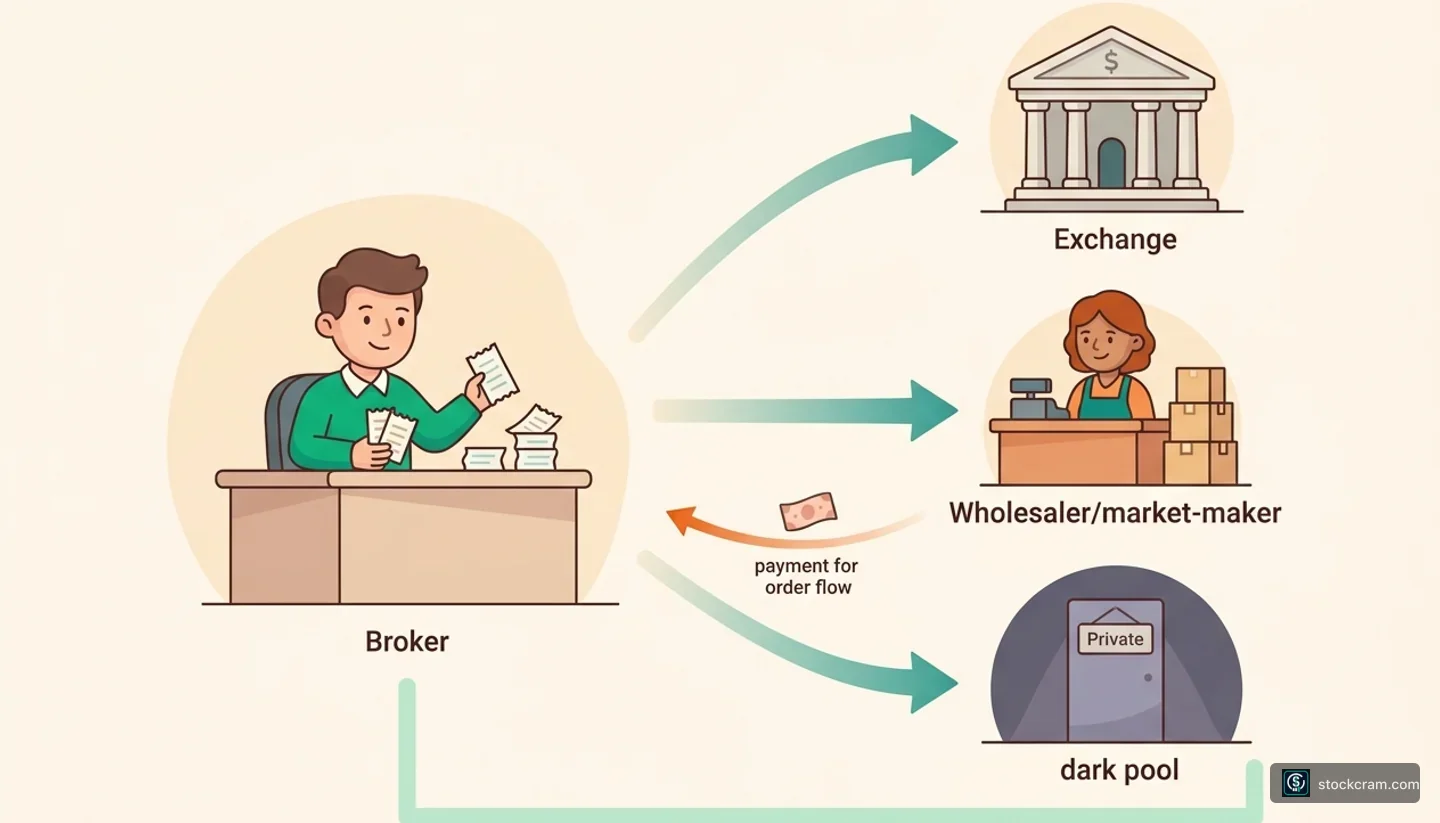
Friendly flat-vector routing diagram: a broker character fans an order out to three destinations — a stock exchange, a wholesaler character, and a quiet private venue. A subtle orange loop carrying a coin returns from the wholesaler to the broker, illustrating payment for order flow. A soft green band underneath suggests a price-protection floor.
Three routes for your order. A small loop carries payment for order flow back from the wholesaler. Underneath, the NBBO floor protects your price across all destinations.

Payment for Order Flow

Many 'commission-free' brokers are paid to send your orders to wholesalers. This is payment for order flow (PFOF). The wholesaler fills your order, often with a little price improvement, and pays your broker for the flow. It's how some brokers earn money without charging you a commission.

Part of how this works: wholesalers see direct exchange feeds (very fast), while most retail brokers price you off the Securities Information Processor (SIP), the consolidated tape that's a few milliseconds slower. That information edge is one reason wholesalers can give you a small price improvement and still earn a spread.

Is PFOF Good or Bad?

PFOF is debated. Supporters note it funds commission-free trading and often delivers price improvement. Critics worry about a broker's incentive to route for payment rather than your best price. Regulators require brokers to seek best execution and to publicly disclose their routing under SEC Rule 606 — anyone can pull their broker's quarterly Rule 606 report to see exactly where orders are being sent and what payment was received.

Internalization

Sometimes a wholesaler fills your order from its own inventory rather than sending it to an exchange. This is internalization, the firm takes the other side of your trade. It's the typical case once your order reaches a wholesaler: the wholesaler is the counterparty. It can be fast and offer price improvement, but the order never reaches a public exchange.

What Protects Your Price

The NBBO

  • A floor on execution quality
  • Your fill must match or beat the national best bid/offer

Best Execution

  • A legal duty on your broker
  • Plus public reports on routing and execution quality

What this means for you

You rarely choose where your order routes, but the rules are built around protecting your price. The NBBO caps how bad your fill can be, and best-execution duties keep brokers accountable.

DestinationWhat it is
ExchangePublic venue with a visible order book
WholesalerOff-exchange firm that fills retail flow
Dark poolPrivate venue for large, hidden orders

Where a retail order can end up.

Educational use only

StockCram is an educational platform — not a broker, dealer, or financial adviser, and is not affiliated with any brokerage mentioned in this lesson.

Key Takeaways

  • Routing happens out of sight - Your broker decides where to send your order — exchange, wholesaler, or dark pool.
  • PFOF funds free trading - Many brokers are paid to route your orders to wholesalers.
  • Internalization - A wholesaler may fill your order from its own inventory, off-exchange.
  • You're protected by rules - The NBBO and best-execution duties guard your fill price.

Continue Learning

Frequently Asked Questions

It's how your broker decides where to send your order to be filled — a public exchange, an off-exchange wholesaler, or a dark pool. It happens automatically and affects your price and speed.

PFOF is when a broker is paid by a wholesaler to route your orders to them. It helps fund commission-free trading; the wholesaler fills your order and pays the broker for the flow.

Not directly, you don't pay it. The debate is whether routing for payment can affect your price. Brokers must seek best execution and disclose execution quality, and many orders receive price improvement.

A private trading venue where large orders can be matched without displaying them publicly, reducing the price impact of big trades. Most retail orders don't interact with them directly.

Usually not on retail apps — routing is handled for you. Some advanced platforms allow directed orders. The NBBO and best-execution rules protect your price regardless.

Share