
Market Analysis
Markets This Week: Oil Spike, Tech Selloff
Read Article
Market Analysis
AI-powered insights into global financial markets
 StockCram Editorial4 min read
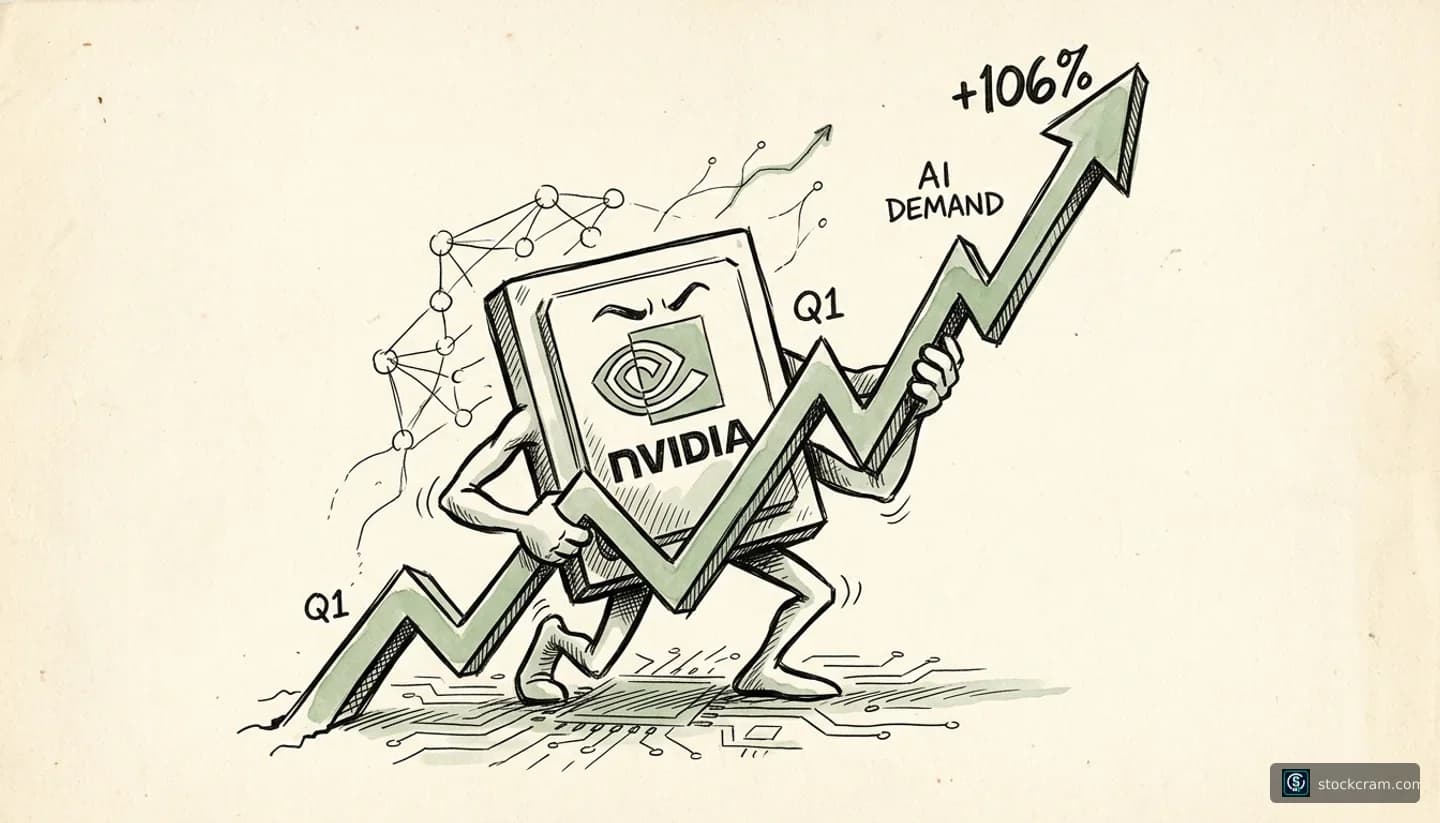
Nvidia's 106% revenue surge validated AI spending while sticky 3.7% inflation kept the Fed in wait-and-see mode. Tech futures soared 1% as markets awaited Jackson Hole signals.
Educational purposes only. This content does not constitute investment advice. Read our disclaimer
StockCram is not a broker-dealer, investment adviser, or financial institution. All content is for educational and informational purposes only and should not be construed as personalized investment advice. Consult a qualified financial professional before making investment decisions. Past performance does not guarantee future results.Nvidia reported second-quarter revenue of $96.2 billion, up 106% year-over-year, and issued guidance for $108 billion next quarter. CEO Jensen Huang forecast 70% revenue growth for fiscal 2028, far exceeding analyst estimates. Data center revenue hit $89 billion, up 117% from last year. The chip giant maintained a stunning 75% gross margin and returned $26 billion to shareholders through buybacks and dividends.
Nvidia's blowout results ease fears that the AI spending boom is losing steam, addressing concerns about whether we're in another AI bubble. The company's ability to sustain triple-digit growth while maintaining industry-leading margins confirms that hyperscalers like Microsoft, Amazon, and Google are still pouring capital into AI infrastructure. This validates the tech rally that's powered the S&P 500 to new highs and suggests AI investments are translating into real revenue, not just hype.
Equities
Strongly Positive – Nasdaq futures up 1%, AI stocks rally on demand confirmation
Rates
Slightly Higher – Strong growth reinforces higher-for-longer rate expectations
FX
Neutral – Dollar steady as risk appetite balanced inflation concerns
Commodities
Neutral – Tech strength offset by energy price declines
The Fed's preferred inflation gauge showed headline PCE rising 3.7% year-over-year in July, matching June and coming in 0.1 percentage points hotter than expected. Core PCE, which strips out food and energy, held at 3.3% annually—meeting forecasts but still 1.3 percentage points above the Fed's 2% target. Consumer spending growth slowed sharply to flat on an inflation-adjusted basis, down from a 0.4% gain in June.
Sticky inflation at nearly double the Fed's target keeps pressure on the central bank to hold rates higher for longer. With the next FOMC meeting on September 15-16, investors had hoped for clearer signs that price pressures were cooling. Instead, the data shows inflation progress has stalled, complicating the Fed's path forward and keeping bond yields elevated. This matters for stocks because higher rates pressure valuations, especially for growth companies trading at premium multiples.
Equities
Negative – Markets dipped on open as inflation complicates Fed path
Rates
Higher – 10-year yield climbed to 4.65% as Fed patience tested
FX
Slightly Stronger – Dollar supported by reduced rate-cut expectations
Commodities
Mixed – Energy prices fell but inflation keeps gold near 3-month highs
The 10-year Treasury yield eased to 4.65% after hitting a 20-month high of 4.75% last week. The 30-year yield also pulled back from its 20-year high of 5.3%. Treasury Secretary Scott Bessent announced plans to at least double bond buybacks using the department's general account, though investors remain skeptical about the program's effectiveness. Lower oil prices after the U.S. tightened Iran sanctions also helped ease near-term inflation fears.
Treasury yields are the foundation for all asset pricing—mortgages, corporate debt, and stock valuations all move in relation to government bond rates. The recent surge to multi-decade highs reflects investor concerns about persistent deficits, AI-driven debt issuance, and the Fed's inflation fight. While the pullback offers some relief, yields remain far above 2023 levels, keeping borrowing costs high for consumers and businesses. For stocks, elevated yields make bonds more attractive and pressure equity valuations.
Equities
Positive – Rate relief helped financials and materials outperform
Rates
Lower – 10-year yield fell to 4.65% from 4.75% high on August 21
FX
Slightly Weaker – Dollar eased as yields pulled back from peaks
Commodities
Positive – Gold hit 3-month highs as real yields softened
Major indexes closed modestly lower on Wednesday as investors positioned ahead of Fed Chair Kevin Warsh's Friday speech at the annual Jackson Hole Economic Symposium. The S&P 500 fell 0.12%, the Nasdaq dropped 0.16%, and the Dow edged down 0.08%. The VIX volatility index declined, suggesting investors are taking a measured approach. Markets are in a wait-and-see mode with the next FOMC meeting scheduled for September 15-16.
Jackson Hole speeches often provide critical signals about the Fed's policy direction. Investors want to know whether Chair Warsh will signal any shift in the central bank's stance given sticky inflation and weakening economic data. With inflation at 3.7% and unemployment at 4.1%, the Fed faces a difficult balancing act. Any hints about the September meeting could trigger significant market moves, especially with earnings season winding down and economic data taking center stage.
Equities
Mixed – S&P 500 down 0.12%, Nasdaq off 0.16%, Dow down 0.08%
Rates
Stable – Yields consolidating ahead of potential guidance
FX
Neutral – Dollar range-bound as investors await policy clarity
Commodities
Neutral – Positioning ahead of central bank commentary
In 2021, Nvidia also posted triple-digit revenue growth during the cryptocurrency mining boom. That rally eventually collapsed when crypto prices crashed in 2022, taking Nvidia shares down 50%.
Markets initially cheered the growth but became skeptical when demand proved unsustainable. This time, AI demand appears broader and more enterprise-driven, but investors are watching for any signs that capital spending might plateau—hence the stock's flat performance despite three straight earnings beats.
Fed Chair Warsh's Jackson Hole remarks could shift market sentiment quickly. Nvidia's guidance is bullish, but the stock has been flat since October despite beating estimates three quarters in a row. Geopolitical tensions around Iran and ongoing U.S.-Canada tariff disputes add uncertainty. The Treasury buyback program's effectiveness remains unproven, and inflation's persistence raises questions about whether the Fed can avoid hiking rates further.