
Market Analysis
Markets This Week: Oil Spike, Tech Selloff
Read Article
Market Analysis
AI-powered insights into global financial markets
 StockCram Editorial4 min read
Markets pause ahead of inflation data and Nvidia earnings while US-Canada trade war escalates. Key catalysts could drive major moves in tech and commodities.
Educational purposes only. This content does not constitute investment advice. Read our disclaimer
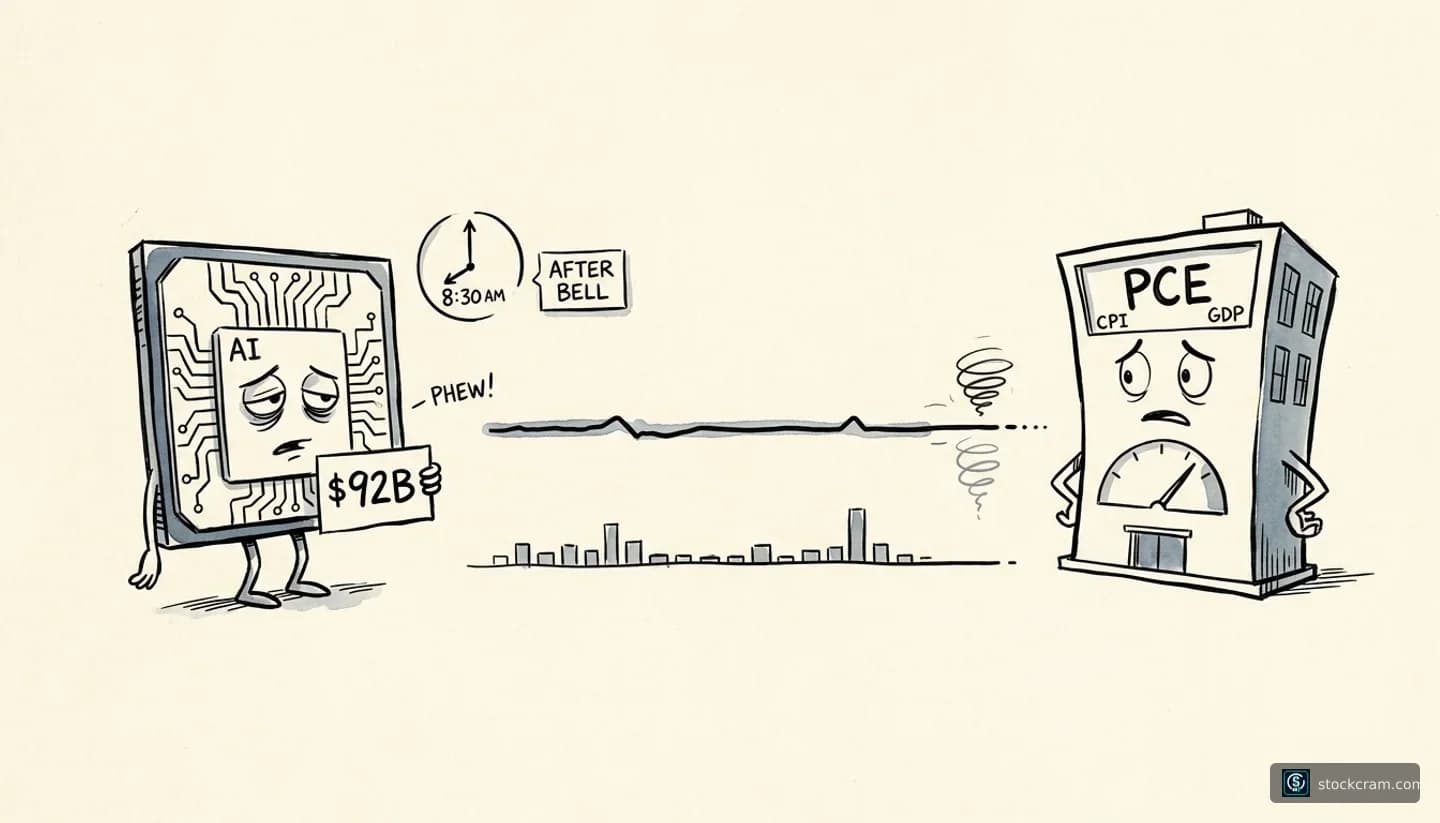
StockCram is not a broker-dealer, investment adviser, or financial institution. All content is for educational and informational purposes only and should not be construed as personalized investment advice. Consult a qualified financial professional before making investment decisions. Past performance does not guarantee future results.Nvidia will release its fiscal 2027 second-quarter earnings report after the stock market closes on Wednesday, August 26, with analysts calling for earnings of $2.09 per share—nearly double what the chipmaker reported one year ago—and revenue forecast to arrive at $92.2 billion, up 97.4% year over year. Nvidia stock closed up 2.2% on Tuesday, snapping a seven-day losing streak and setting up what could be a pivotal moment for AI stock valuations.
The artificial intelligence giant's earnings release is arguably the most anticipated of the quarterly earnings season because Nvidia dominates the AI chip and infrastructure market, making it a bellwether for the fast-growing AI space. Any guidance miss could trigger a broader tech selloff given elevated expectations and the stock's massive influence on market sentiment—particularly as investors debate whether we're experiencing another AI bubble or sustainable growth.
Equities
Tech-heavy Nasdaq futures down 0.2%; options pricing 5.4% post-earnings move for NVDA
Rates
Treasury yields holding steady as traders wait for direction from tech bellwether
FX
Dollar could weaken on any disappointment as tech outflows drive safe-haven demand
Commodities
Oil down for third straight session; gold steady near $4,637
Crucial economic data releases are expected on Wednesday, August 26, 2026, including Core PCE Price Index, which will offer critical information on inflation trends. Investors will find out if the Fed's preferred inflation gauge continued its downward trajectory, stalled, or reaccelerated—which would put more pressure on the central bank to raise rates. Economists are expecting core Personal Consumption Expenditures of 3.3%, unchanged from the month before, a reading that will heavily influence how markets react to interest rate expectations.
The PCE reading will shape expectations for Fed Chair Kevin Warsh's Jackson Hole speech later this week and the September FOMC meeting. With inflation still above the 2% target and three regional Fed presidents dissenting in favor of rate hikes at the July meeting, any upside surprise could reignite hawkish bets. Understanding Kevin Warsh's policy approach becomes even more critical as markets navigate this high-stakes inflation data.
Equities
S&P 500 futures flat as traders await clarity on Fed's next move
Rates
10-year Treasury yield at 4.625%; could spike if core PCE exceeds 3.3%
FX
Dollar sensitive to any upside surprise that could keep Fed hawkish
Commodities
Oil prices falling on demand concerns; gold near two-month highs
The United States' 50% tariffs on a broad range of Canadian goods took effect August 22, 2026, with impacted products including dairy, alcohol, and a wide range of items across numerous industries from electronics and building materials to apparel and agricultural goods. On August 25th, Canada announced its counter-tariff plan in response to the latest round of US tariffs, with Canada's counter-tariffs impacting over 700 different items and taking effect on September 8th, 2026. This escalating trade conflict is creating the kind of geopolitical uncertainty that often tests investor discipline—the type of scenario explored in our guide on whether to sell stocks during heightened tensions.
Stocks held on to gains as the trade spat between the US and Canada escalated, with notably, as the US and Canada have ratcheted up their rhetoric, they have left oil off the table for now, even as they raise tariffs on steel, dairy, and other products. The tariff war could disrupt $700 billion in annual bilateral trade and complicate supply chains for manufacturers, creating sector-specific risks that demand careful portfolio management.
Equities
Materials and industrials sectors vulnerable; cross-border supply chains at risk
Rates
Bond markets pricing in growth slowdown from trade disruption
FX
Canadian dollar under pressure; US dollar mixed as trade uncertainty weighs
Commodities
Oil notably excluded from tariffs so far, limiting energy price impact
Dick's Sporting Goods reported fiscal second-quarter earnings on Tuesday that missed Wall Street expectations amid what it called a 'challenging' environment, with the company saying Foot Locker was largely impacted by those conditions and lowering its comparable sales outlook. Dick's stock fell 30% in trading Tuesday, its worst day since 2023, with the company revealing an adjusted EPS of $3.53 and revenues of $5.59 billion, both falling short of Wall Street expectations, and revising its full-year sales and operating profit forecasts downward, citing increased promotions in the athletic footwear market and fewer new product launches.
The dramatic selloff signals investor concern about consumer health and the challenges of integrating large acquisitions. While Dick's core business showed 4.9% comparable sales growth, the Foot Locker drag highlights weakness in the athletic footwear category that could spread to other retailers. This type of single-stock volatility underscores why understanding diversification through ETFs remains crucial for managing portfolio risk.
Equities
Retail sector under pressure; consumer discretionary stocks vulnerable
Rates
Adds to narrative of slowing consumer demand that could ease inflation
FX
Limited direct impact; reflects broader consumer spending concerns
Commodities
No material impact
Similar to August 2018 when Nvidia's earnings caused a 30% selloff in chip stocks after the crypto mining bubble burst, today's report carries outsized influence on the broader tech sector and AI investment narrative.
The 2018 Nvidia disappointment triggered a broader market correction that lasted through December. However, the company eventually recovered as new growth drivers (data center AI) emerged, with the stock up 10x from those lows by 2023.
Nvidia's results could surprise in either direction given elevated expectations and recent stock weakness. The trade war's economic impact remains unclear as oil has been excluded so far. Fed policy trajectory depends heavily on whether core inflation shows signs of cooling or remains stubbornly elevated.